
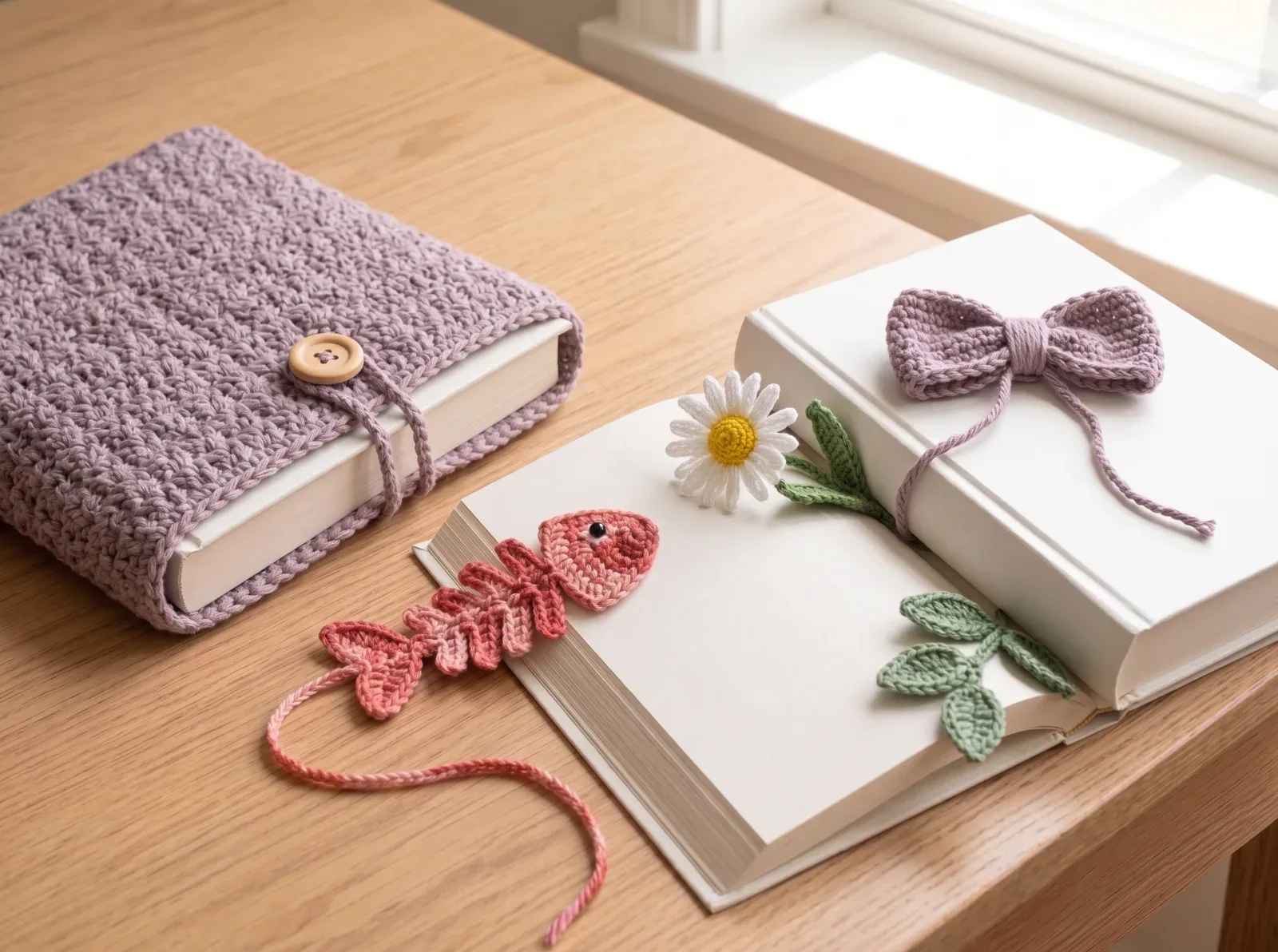
Crochet Bookmarks & Reading Accessories
Quick crochet bookmarks and book-friendly accessories designed to stay slim between pages or protect a favorite paperback. Start with a fishbone, daisy, leaf, or bow bookmark, then make the matching book sleeve.
Project pages in this collection
Browse the crochet projects linked to this collection, with materials, written instructions and finishing ideas.
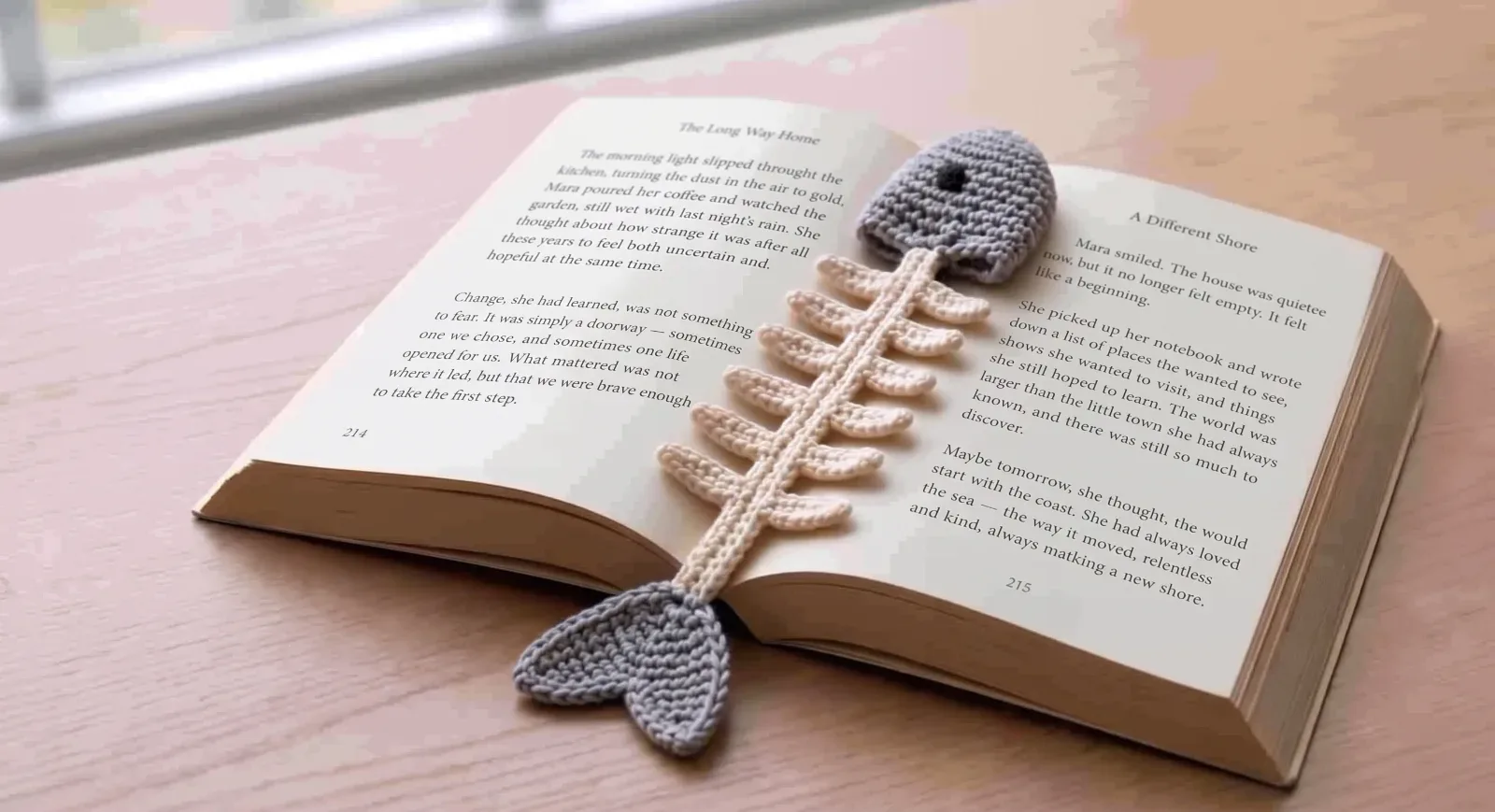
Crochet Fishbone Bookmark
A long fishbone-style crochet bookmark with a compact fish head, flexible white spine, small rib bones, and a tail that hangs below the book.
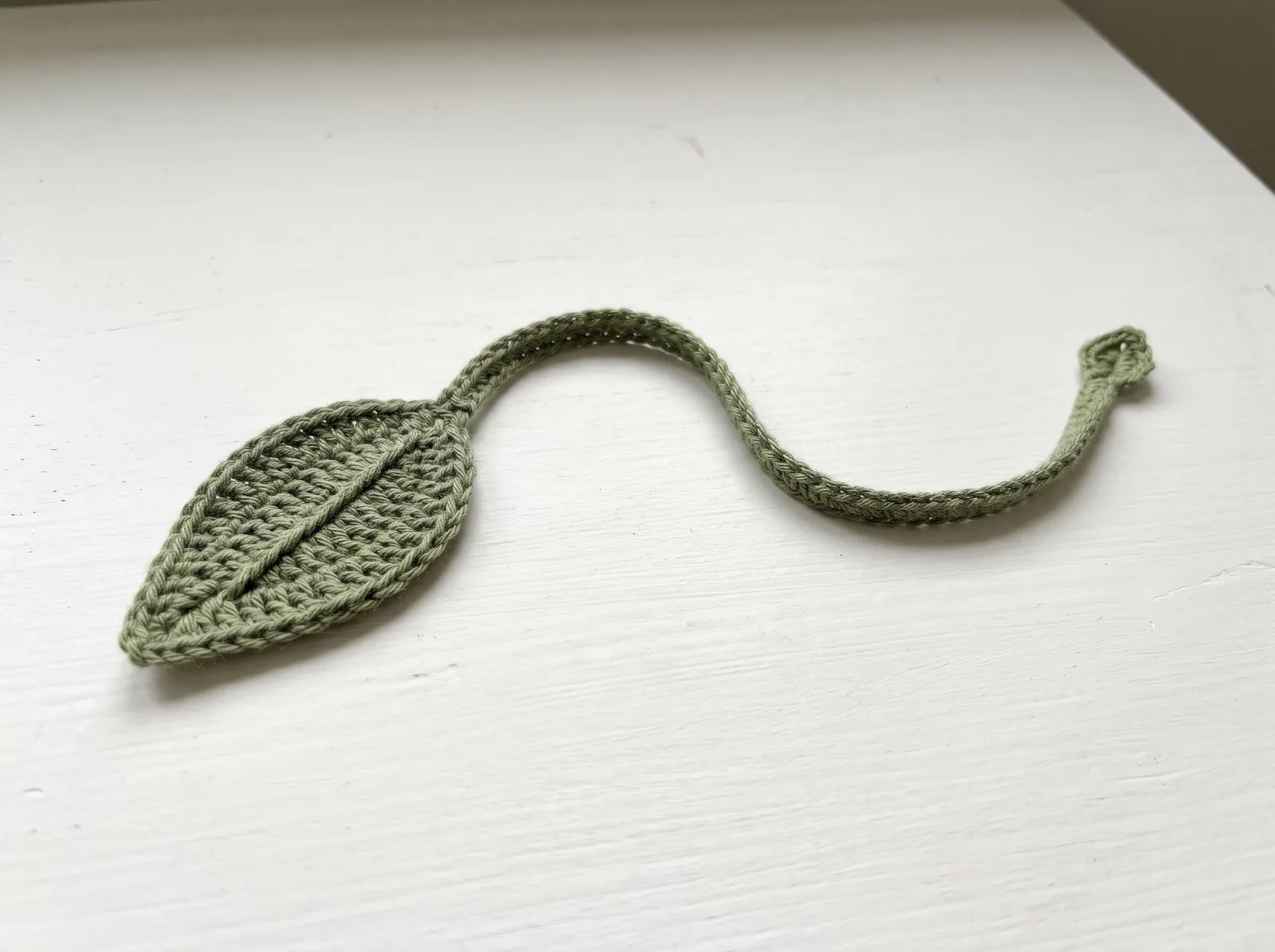
Crochet Leaf Bookmark
Crochet a single flat sage leaf with a stitched central vein, slim chain-based stem and small end loop. The motif and cord stay narrow enough to use as a bookmark; this working pattern is awaiting a hands-on gauge and fit check.
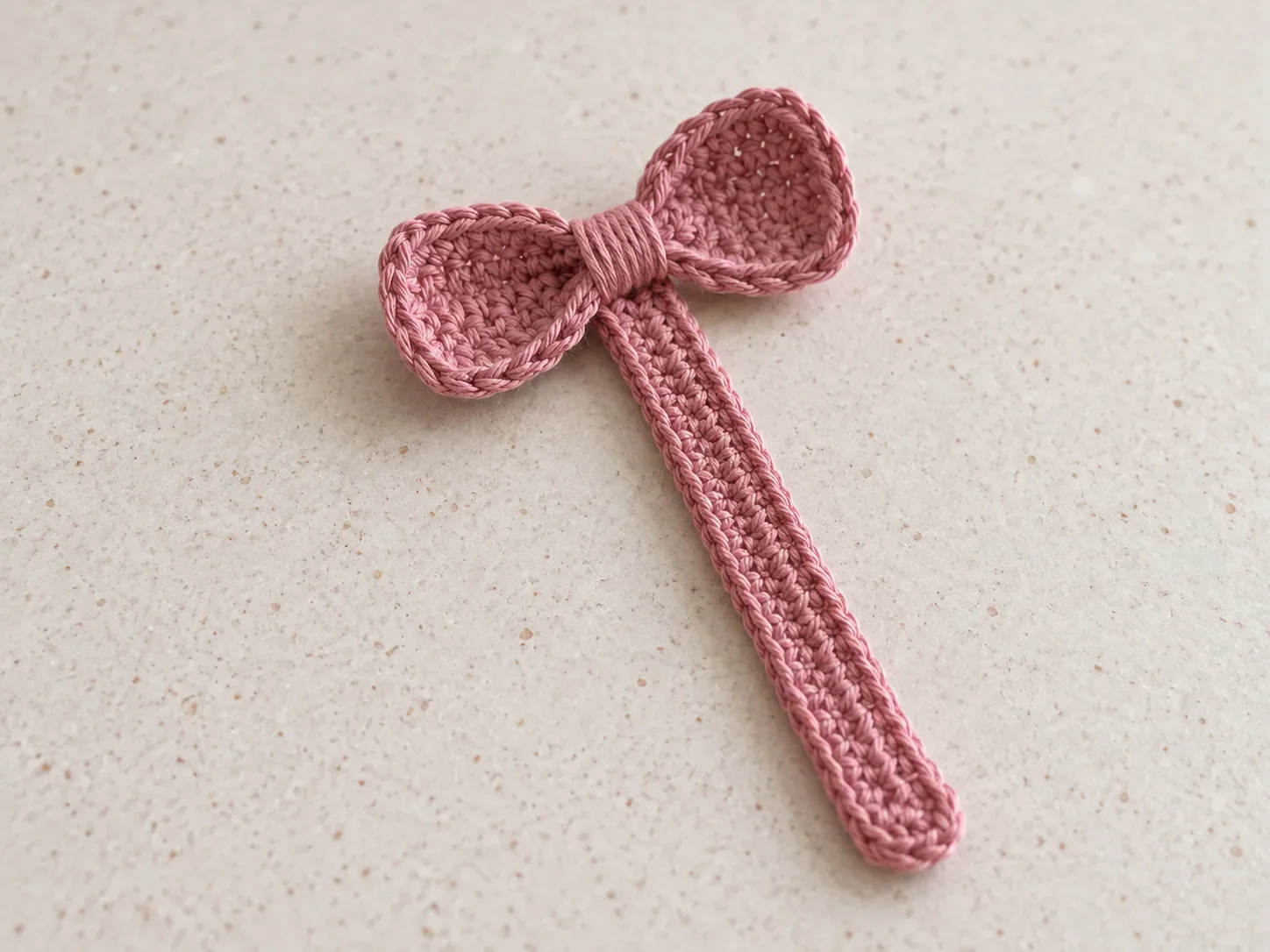
Crochet Bow Bookmark
A feminine crochet bookmark with a small flat bow at the top and a slim stitched ribbon that stays low-profile between pages.
What are good crochet projects for book lovers?
Slim bookmarks and measurement-based book sleeves are useful book-lover projects because they use small amounts of yarn, finish quickly, and can be personalized without adding bulk between pages.
- Fast scrap-yarn bookmark projects
- Flat designs that sit cleanly between pages
- A larger book sleeve option for gifting and everyday use
Before you choose a project
Which crochet bookmark is easiest for beginners?+
Simple chain-and-slip-stitch stems with a small flower, leaf, or bow are usually the easiest place to start because the shaping is limited and the finished piece stays flat.
What yarn works best for crochet bookmarks?+
Smooth cotton or cotton-blend yarn keeps stitches crisp and helps the bookmark stay flat. Thinner yarn also reduces bulk inside the book.
How long should a crochet bookmark be?+
Measure the books you use most. A flexible stem around 18–24 cm works for many paperbacks and hardcovers, but measurement-based sizing is more reliable than one fixed length.
Each project links directly to the beginner stitches and finishing skills you need, so you can review a technique without leaving the project flow.