How to Choose a Crochet Hook Size
Choose a crochet hook size using the yarn label, pattern gauge, fabric goal, and your own tension instead of relying on one universal chart.

Start with the pattern or yarn-label recommendation, make a swatch, then adjust the hook size until the fabric and gauge match the project’s goal.
Mini lesson sheet
Keep the short row instructions on one side and the visual target on the other.
- Use this as a quick check before the full lesson.
- Keep it nearby while you practice the stitch or technique.
Finished result
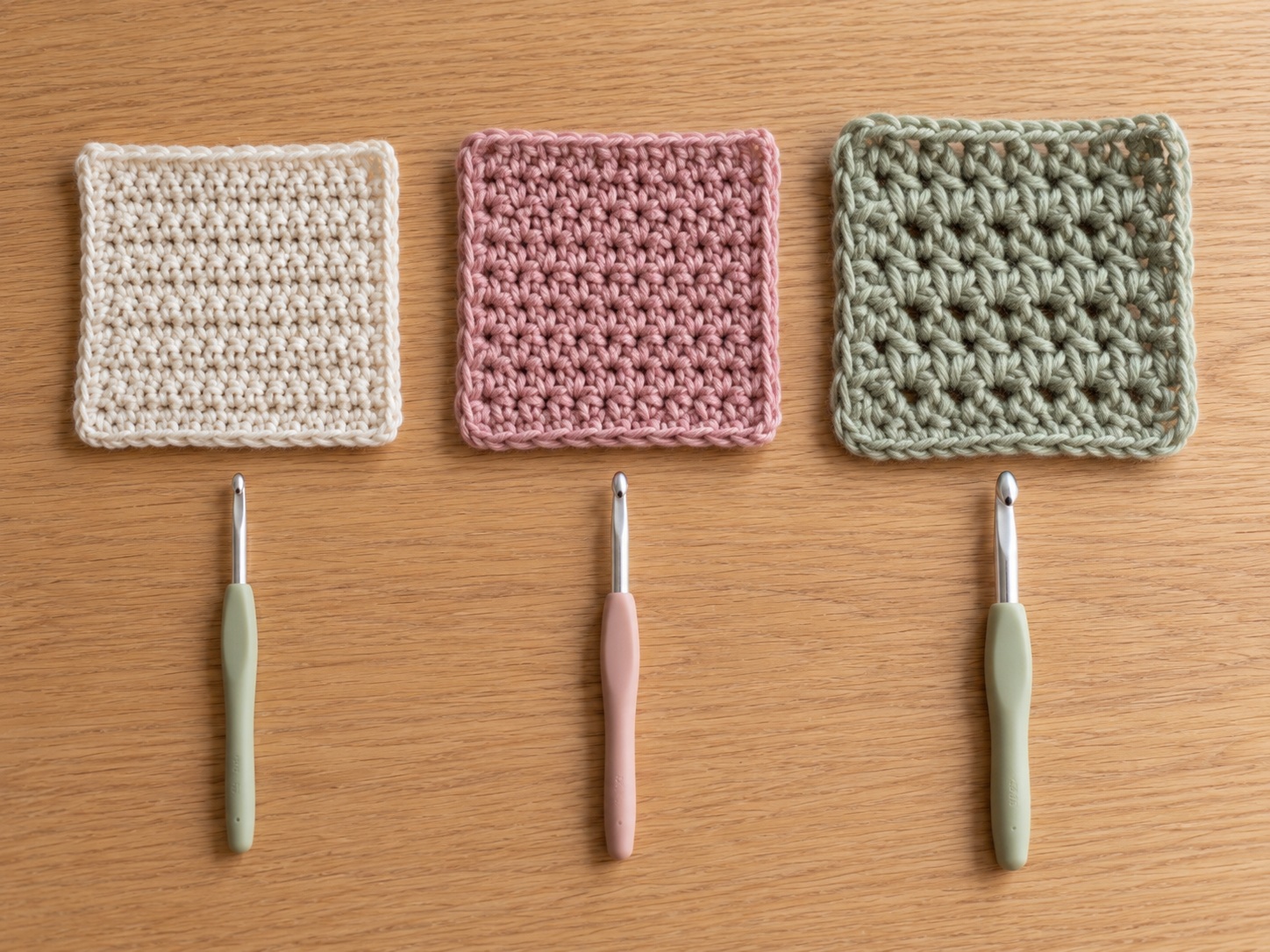
Key facts
How to do it
 01Step 1
Check the pattern first; its suggested hook size is the best starting point for that specific project.
 02Step 2
If you do not have a pattern, check the yarn label for a recommended crochet-hook range.
 03Step 3
Decide whether you want dense fabric, balanced drape, or an open/lacy fabric.
 04Step 4
Crochet a small swatch with a hook in the recommended range.
 05Step 5
Evaluate both gauge and fabric feel, then move up or down in hook size as needed.
Video walkthrough from Le Crochet de Plume
Use this as a second explanation after the written steps. Pause, replay, and compare the motion with the close-up images above.
Make it easier
- Judge the fabric, not only the number printed on the hook.
- Keep the hook used for a work-in-progress with the project or record it in your notes.
What usually goes wrong
- Choosing only by yarn weight without checking project gauge
- Assuming two crocheters will get the same gauge with the same hook
Build the next connected skill.

Crochet Yarn Weight Chart: Categories & Typical Uses
Understand common yarn weight categories from lace through jumbo, how yarn thickness affects fabric, and why label gauge matters more than category names alone.
Open guide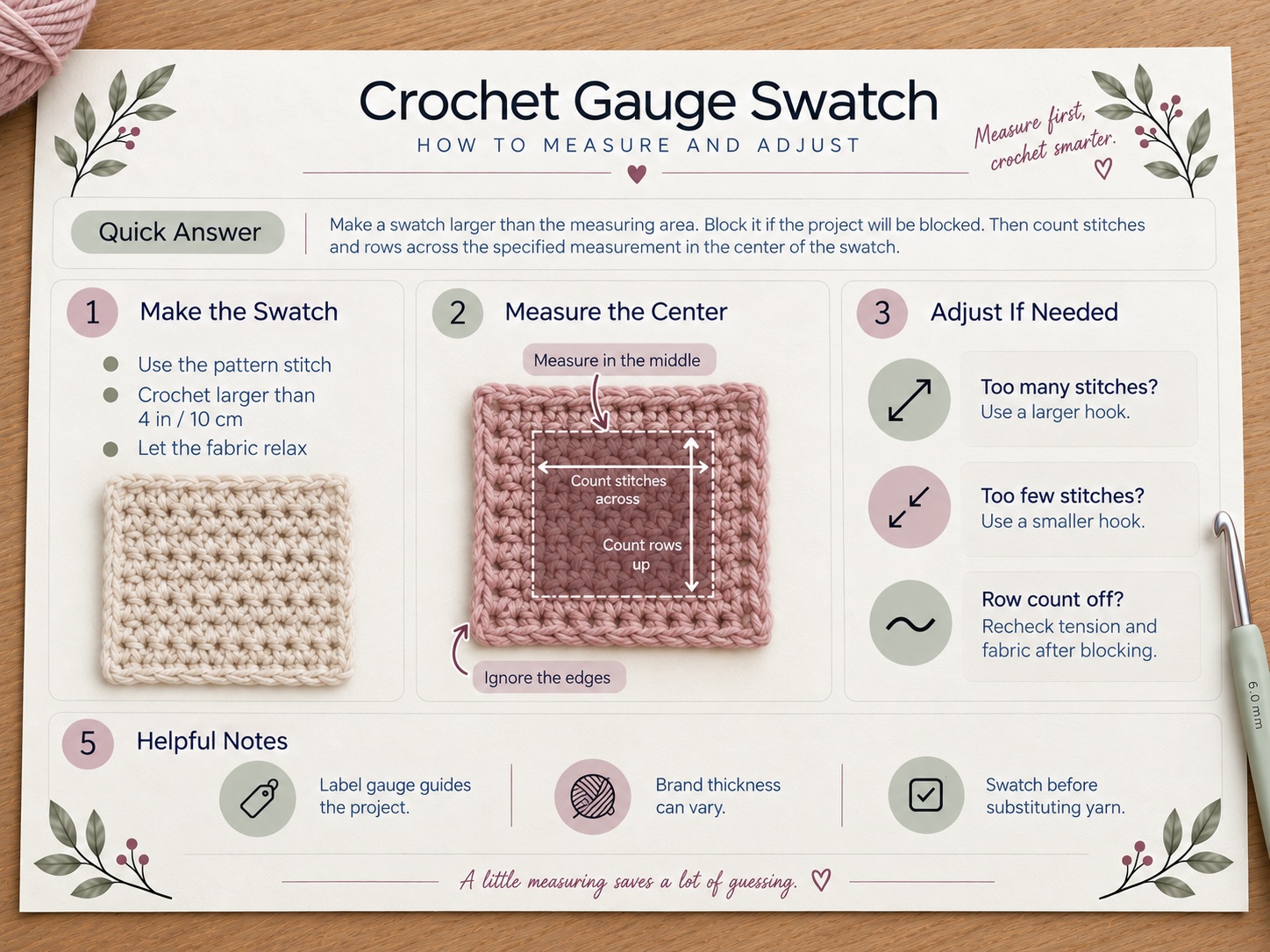
Crochet Gauge Swatch: How to Measure and Adjust
Learn how to make and measure a crochet gauge swatch, then adjust hook size or tension when your stitch and row counts do not match the pattern.
Open guide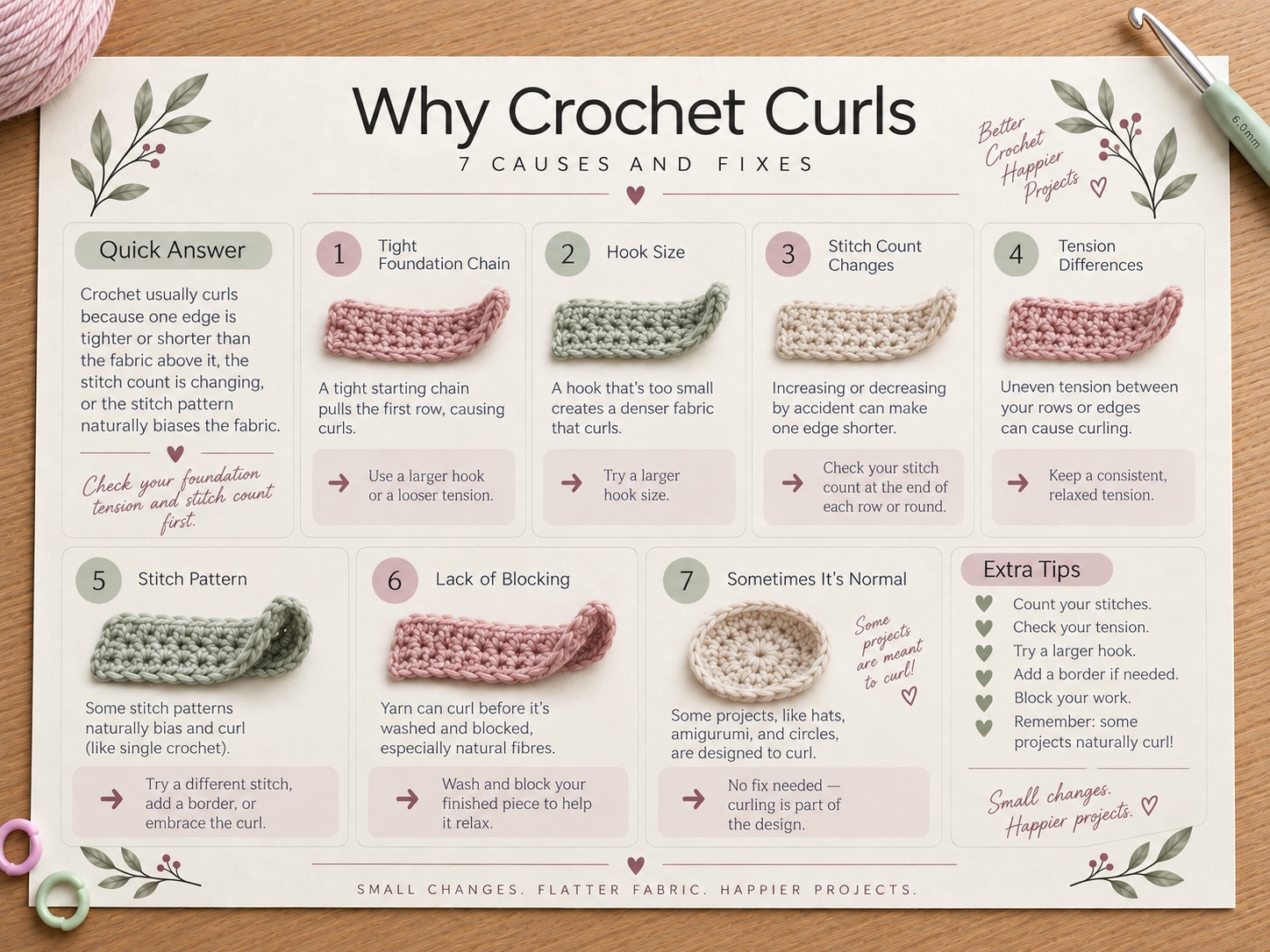
Why Crochet Curls: 7 Causes and Fixes
Diagnose crochet curling caused by tight foundations, hook size, stitch count, tension, stitch pattern, or blocking, and decide when curling is expected.
Open guide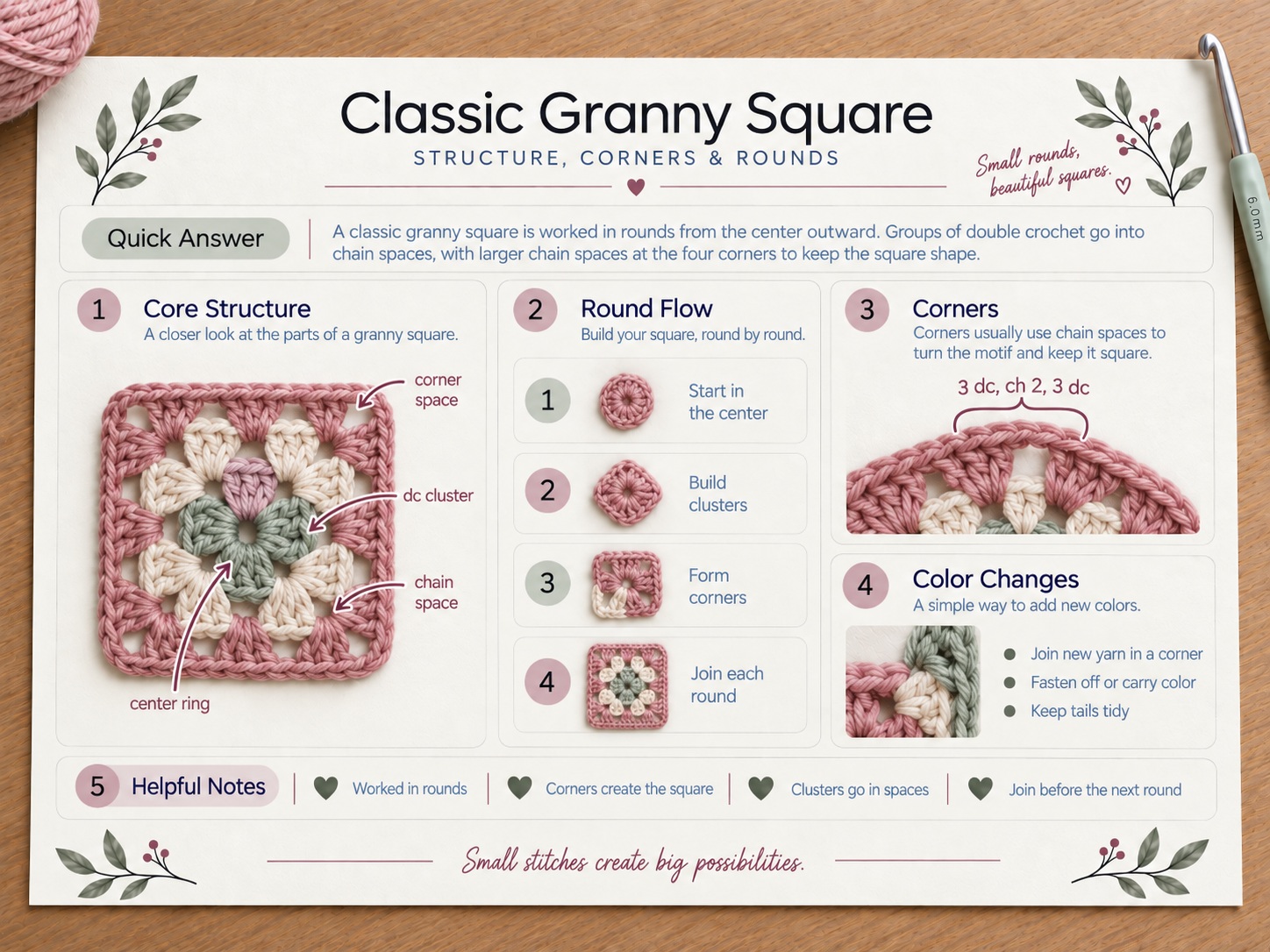
Classic Granny Square: Structure, Corners & Rounds
Understand the structure of a classic granny square, including double-crochet clusters, chain spaces, corners, round joins, and color changes.
Open guide