Why Is My Crochet Curling? 7 Causes and Fixes
Diagnose crochet curling caused by tight foundations, hook size, stitch count, tension, stitch pattern, or blocking, and decide when curling is expected.
Follow the written lesson for each stitch. US crochet terms are used unless stated otherwise.
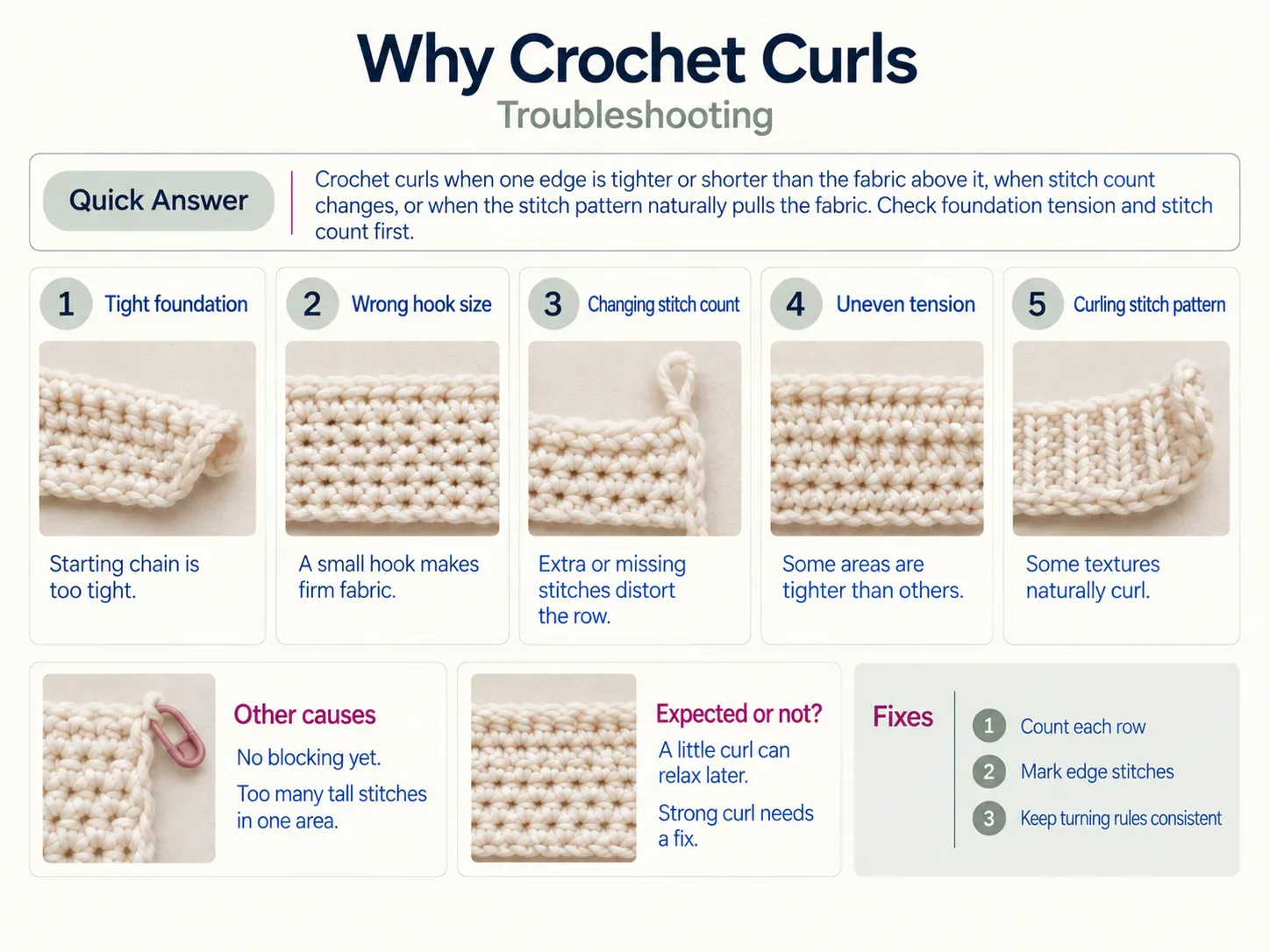
Crochet usually curls because one edge is tighter or shorter than the fabric above it, the stitch count is changing, or the stitch pattern naturally biases the fabric. Check foundation tension and stitch count first.
Mini lesson sheet
Keep each complete first instruction alongside the accompanying reference illustration.
- Use this as a quick check before the full lesson.
- Keep it nearby while you practice the stitch or technique.
Corrected result
Key facts
Details that prevent common beginner mistakes
Diagnose before adding rows
Edges curling inward can mean tight stitches, too few increases in a circular piece or the wrong hook-to-yarn pairing. A circle that ruffles often has too many increases. Recount before changing hook size.
Work through the problem
- Step 1 image01Step 1
Lay the piece flat and identify whether the curl starts at the foundation edge, side edges, or across the whole fabric.
- Step 2 image02Step 2
Count stitches to confirm the row width has not changed accidentally.
- Step 3 image03Step 3
Compare the foundation tension with the body of the fabric. A tight starting chain often pulls the bottom edge inward.
- Step 4 image04Step 4
Check whether the hook size or yarn combination is creating an unusually stiff fabric.
- Step 5 image05Step 5
Review the pattern to see whether the stitch naturally curls before blocking or seaming.
- Step 6 image06Step 6
Correct the cause: remake the foundation more loosely, adjust hook size, fix stitch count, or block the piece if appropriate for the fiber and project.
Make it easier
- Do not block a piece to hide a structural stitch-count error.
- Try a larger hook only for the foundation chain if the rest of your gauge is correct.
What usually goes wrong
- Assuming all curling will disappear with blocking
- Adding border stitches before checking whether row counts are wrong
Questions about why is my crochet curling? 7 causes and fixes
Why does my crochet keep curling?+
Crochet often curls when the foundation edge is tighter than the rows above it, the hook is too small, the stitch count is changing, or the stitch pattern naturally pulls the fabric. Check the foundation tension and stitch count first.
Will blocking fix crochet curling?+
Blocking can relax mild curling caused by tension or fiber memory, but it will not correct a wrong stitch count or a foundation chain that is much too tight.
Can a larger crochet hook stop curling?+
Sometimes. If the fabric is stiff or the foundation edge is tight, moving up a hook size can add flexibility. Make a small swatch before changing the whole project.
Is some curling normal in crochet?+
Yes. Dense stitches and certain stitch patterns can curl before the piece is large enough or before blocking. The key is whether the curl improves as the fabric grows and the stitch count remains correct.
Build the next connected skill.
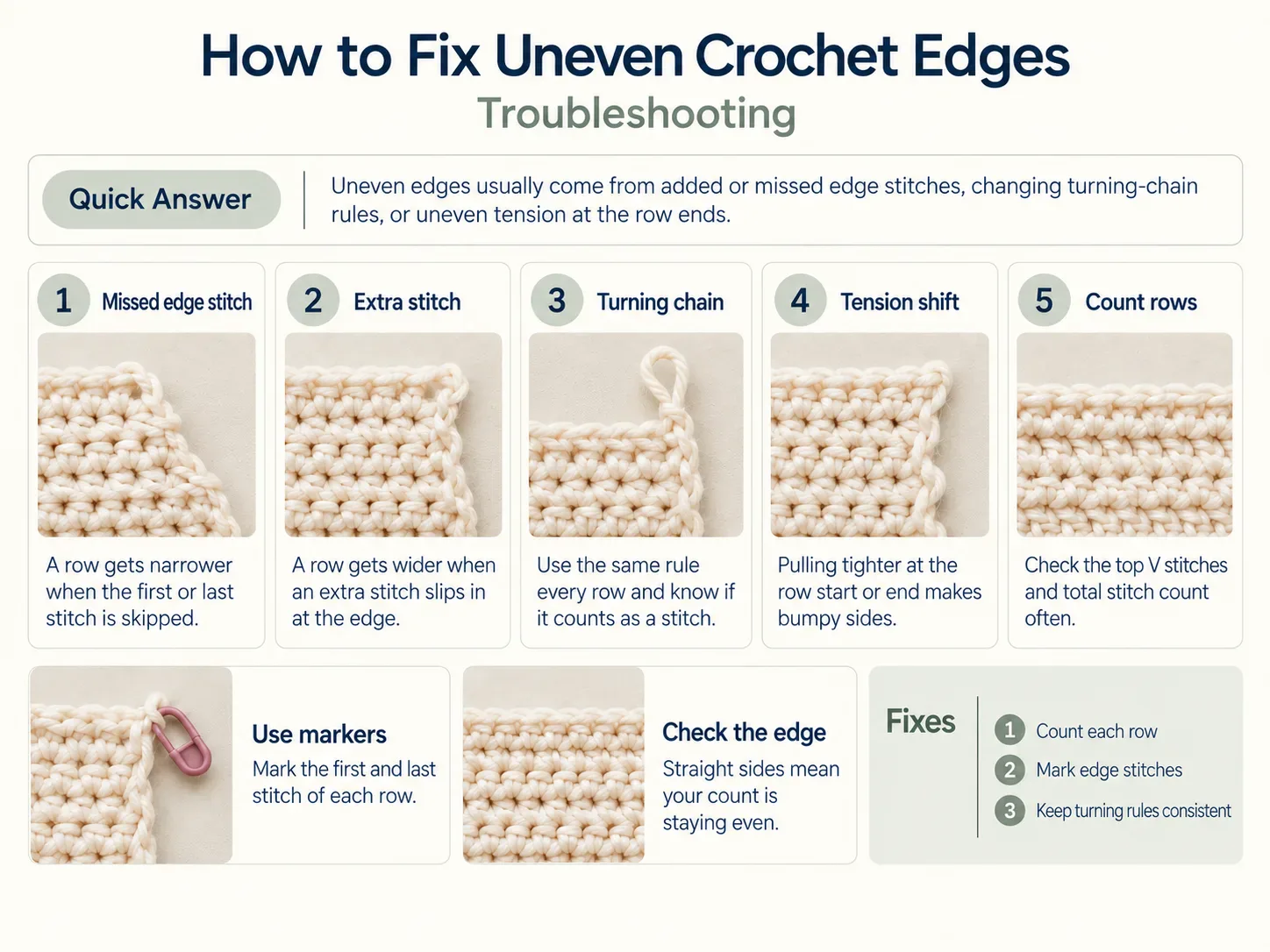
How to Fix Uneven Crochet Edges
Learn why crochet edges get wider, narrower, or bumpy and how stitch markers, turning-chain rules, and stitch counts create straighter sides.
Open guide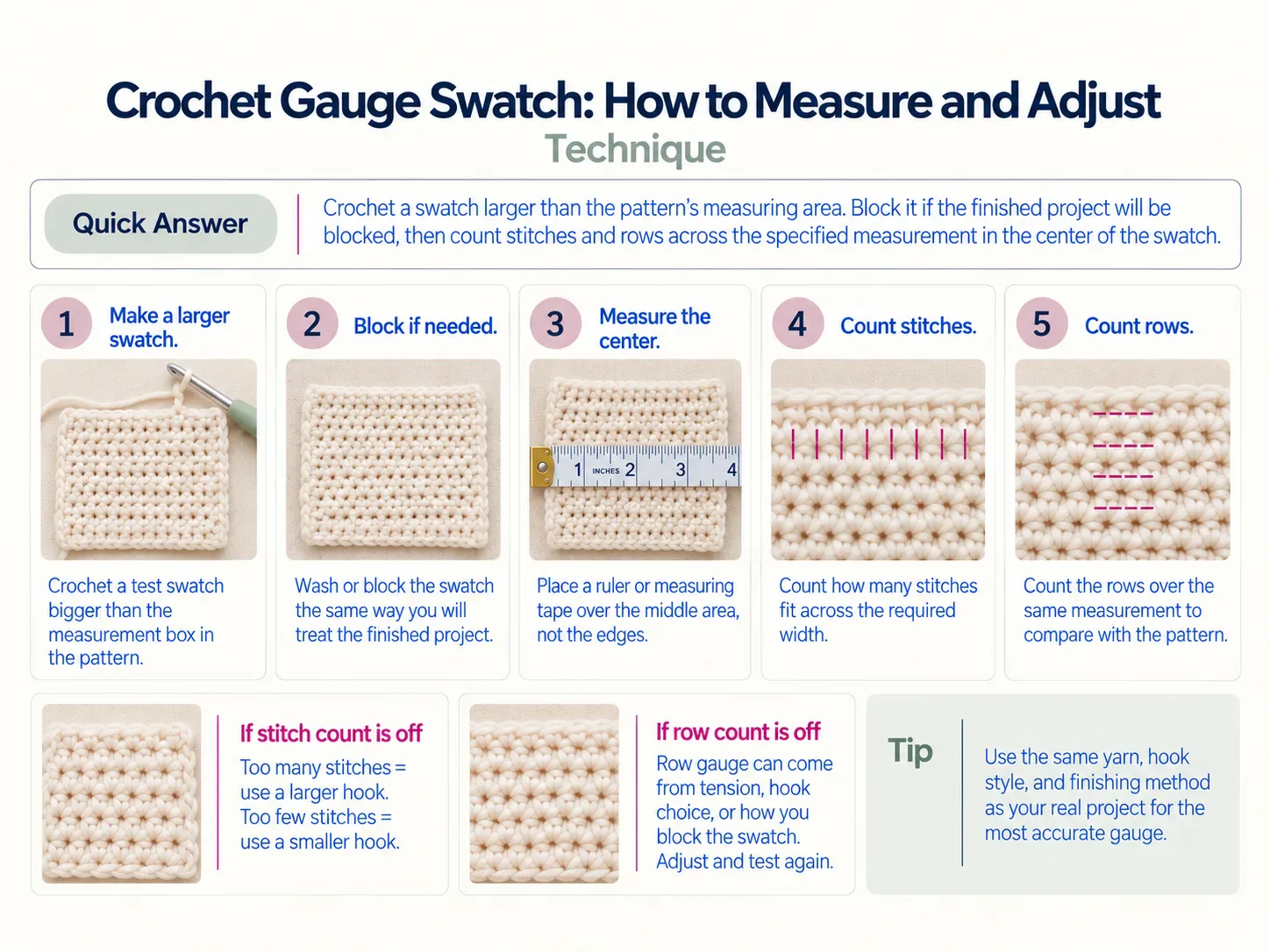
Crochet Gauge Swatch: How to Measure and Adjust
Learn how to make and measure a crochet gauge swatch, then adjust hook size or tension when your stitch and row counts do not match the pattern.
Open guide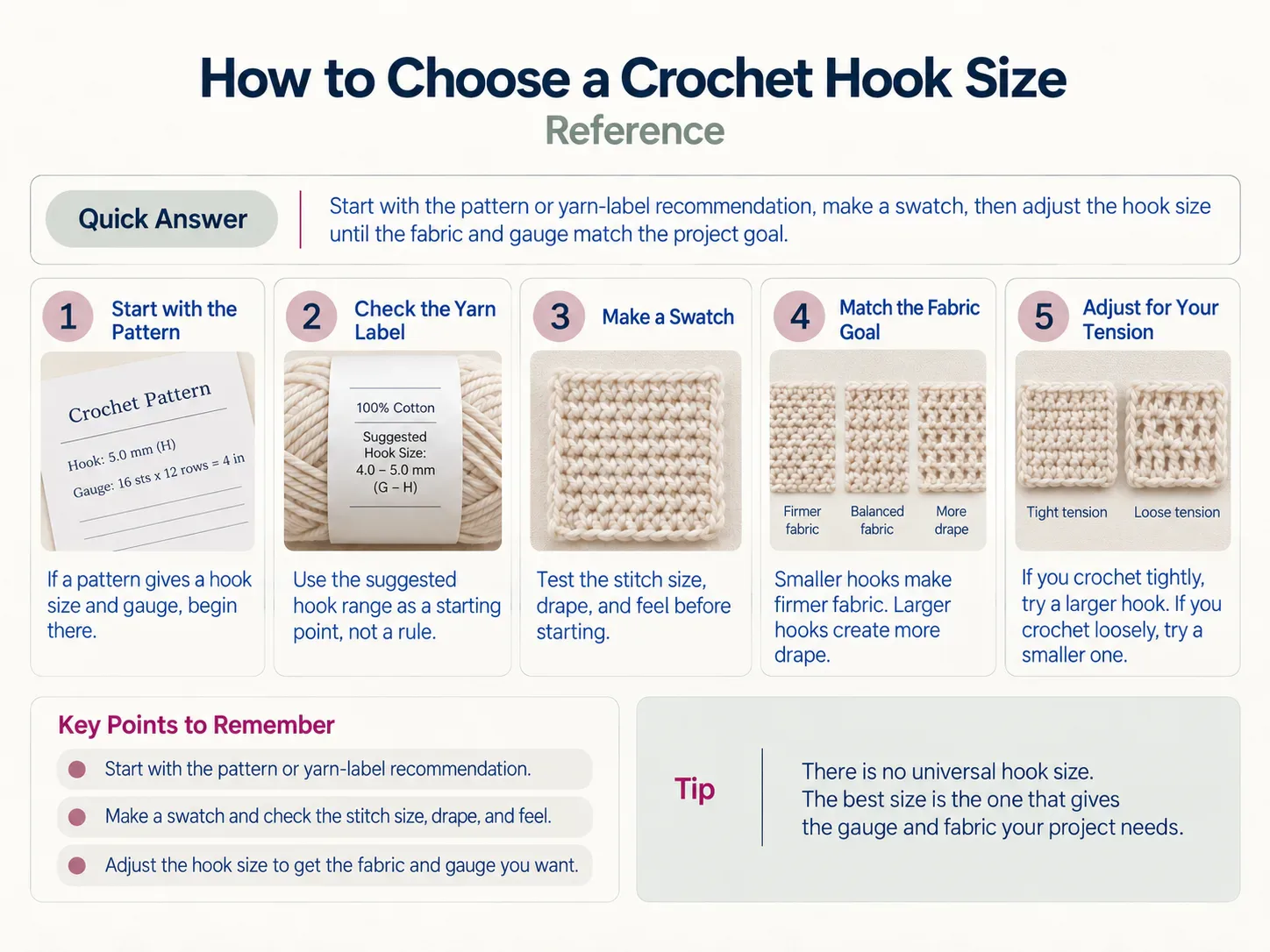
How to Choose a Crochet Hook Size
Choose a crochet hook size using the yarn label, pattern gauge, fabric goal, and your own tension instead of relying on one universal chart.
Open guide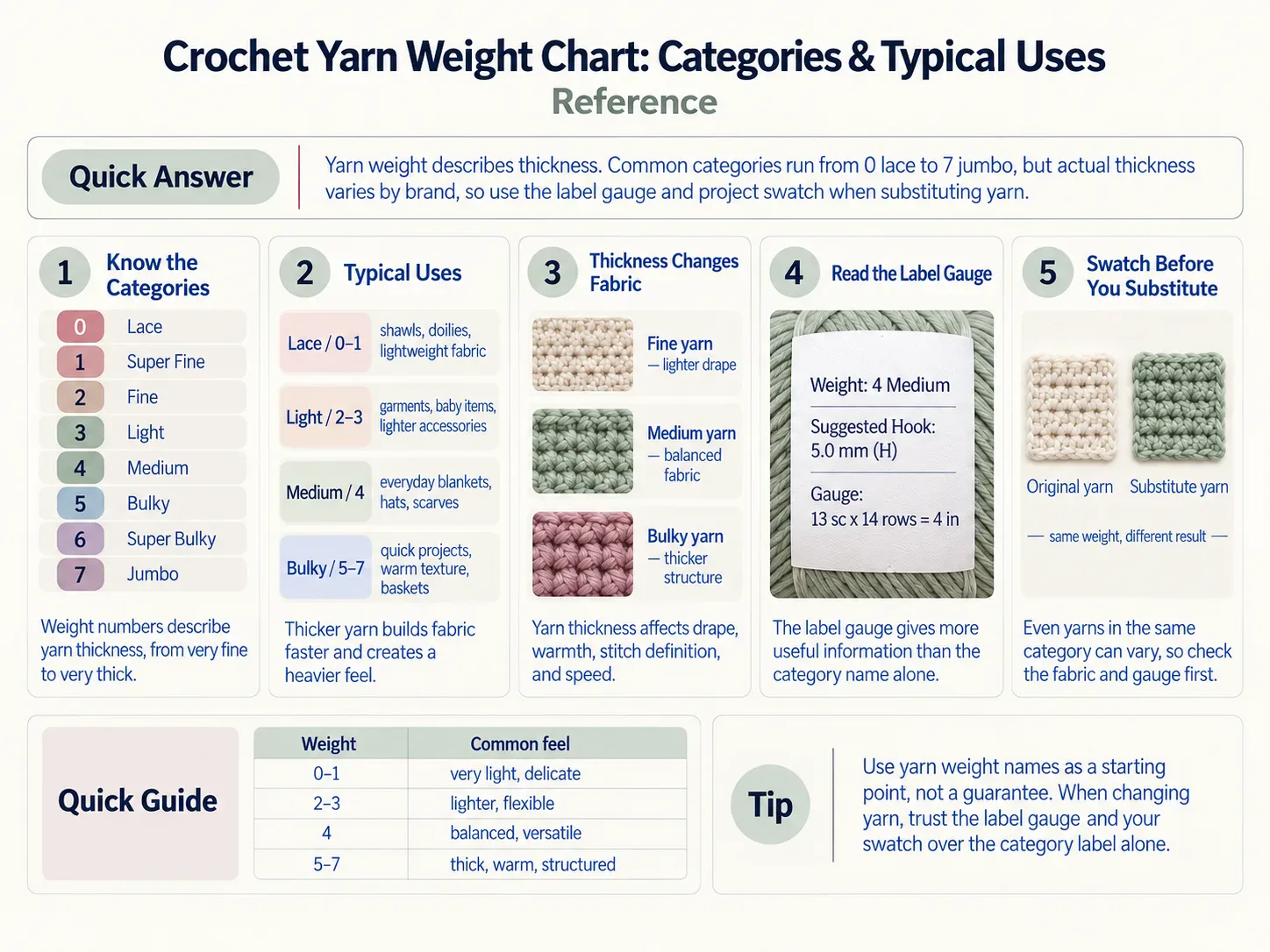
Crochet Yarn Weight Chart: Categories & Typical Uses
Understand common yarn weight categories from lace through jumbo, how yarn thickness affects fabric, and why label gauge matters more than category names alone.
Open guide