Crochet Yarn Weight Chart: Categories & Typical Uses
Understand common yarn weight categories from lace through jumbo, how yarn thickness affects fabric, and why label gauge matters more than category names alone.
Follow the written lesson for each stitch. US crochet terms are used unless stated otherwise.
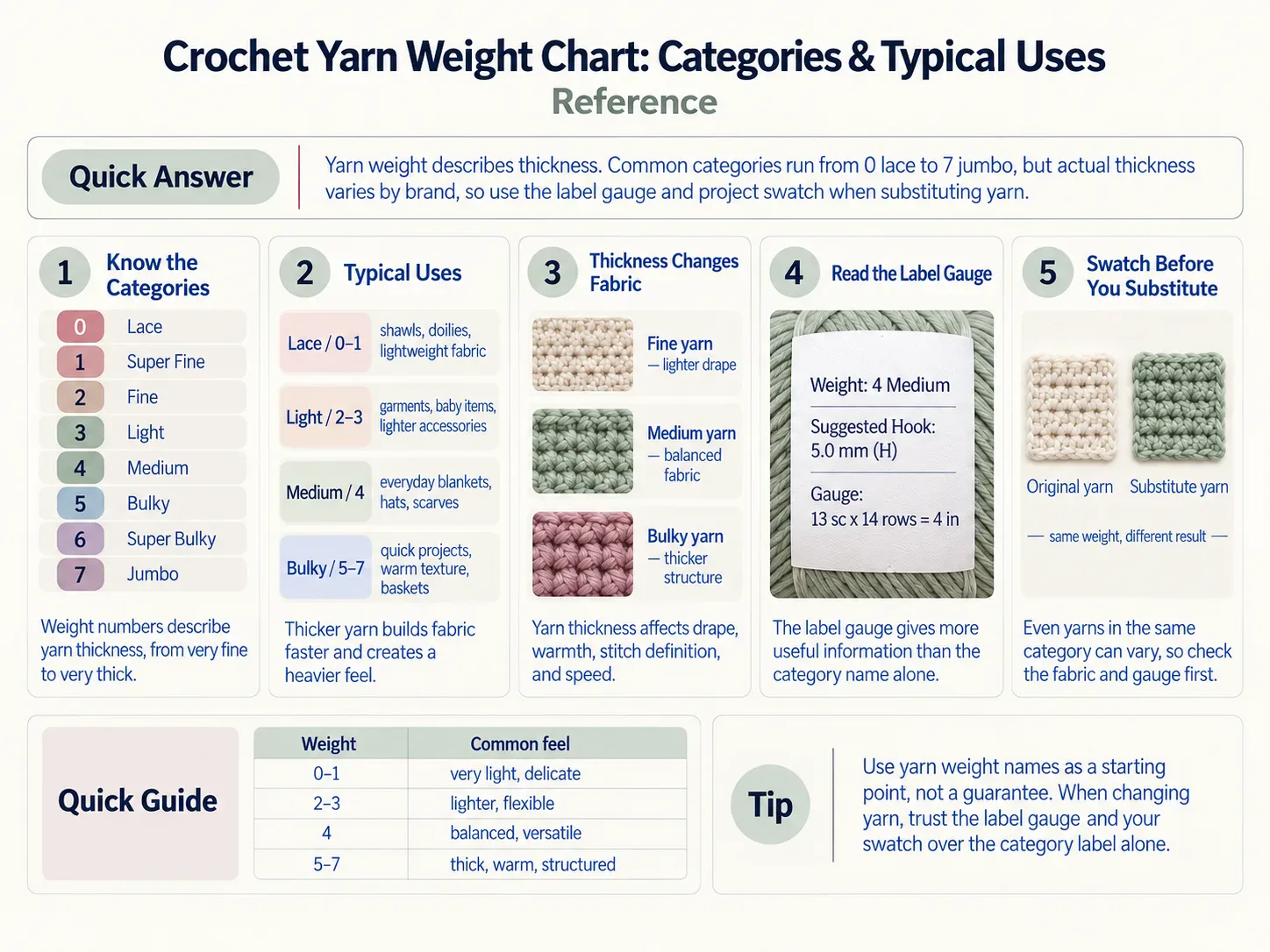
Yarn weight describes thickness. Common categories run from 0 lace to 7 jumbo, but actual thickness varies by brand, so use the label gauge and project swatch when substituting yarn.
Mini lesson sheet
Keep each complete first instruction alongside the accompanying reference illustration.
- Use this as a quick check before the full lesson.
- Keep it nearby while you practice the stitch or technique.
Finished result
Key facts
Details that prevent common beginner mistakes
Weights are categories, not guarantees
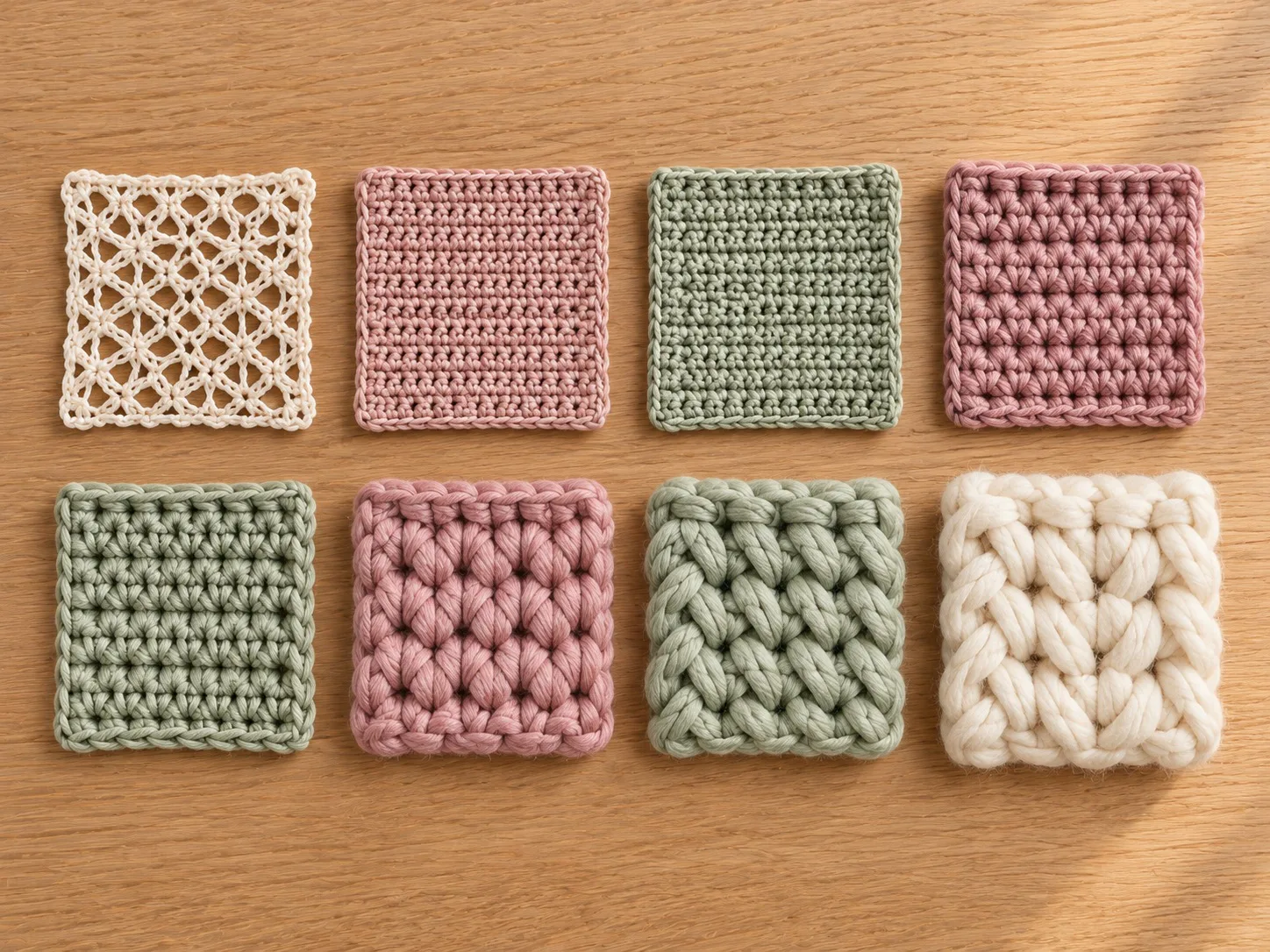
Two yarns in the same numbered yarn-weight category may drape differently. Check fiber, actual length per mass, recommended hook and the pattern gauge rather than assuming direct substitutability.
How to do it
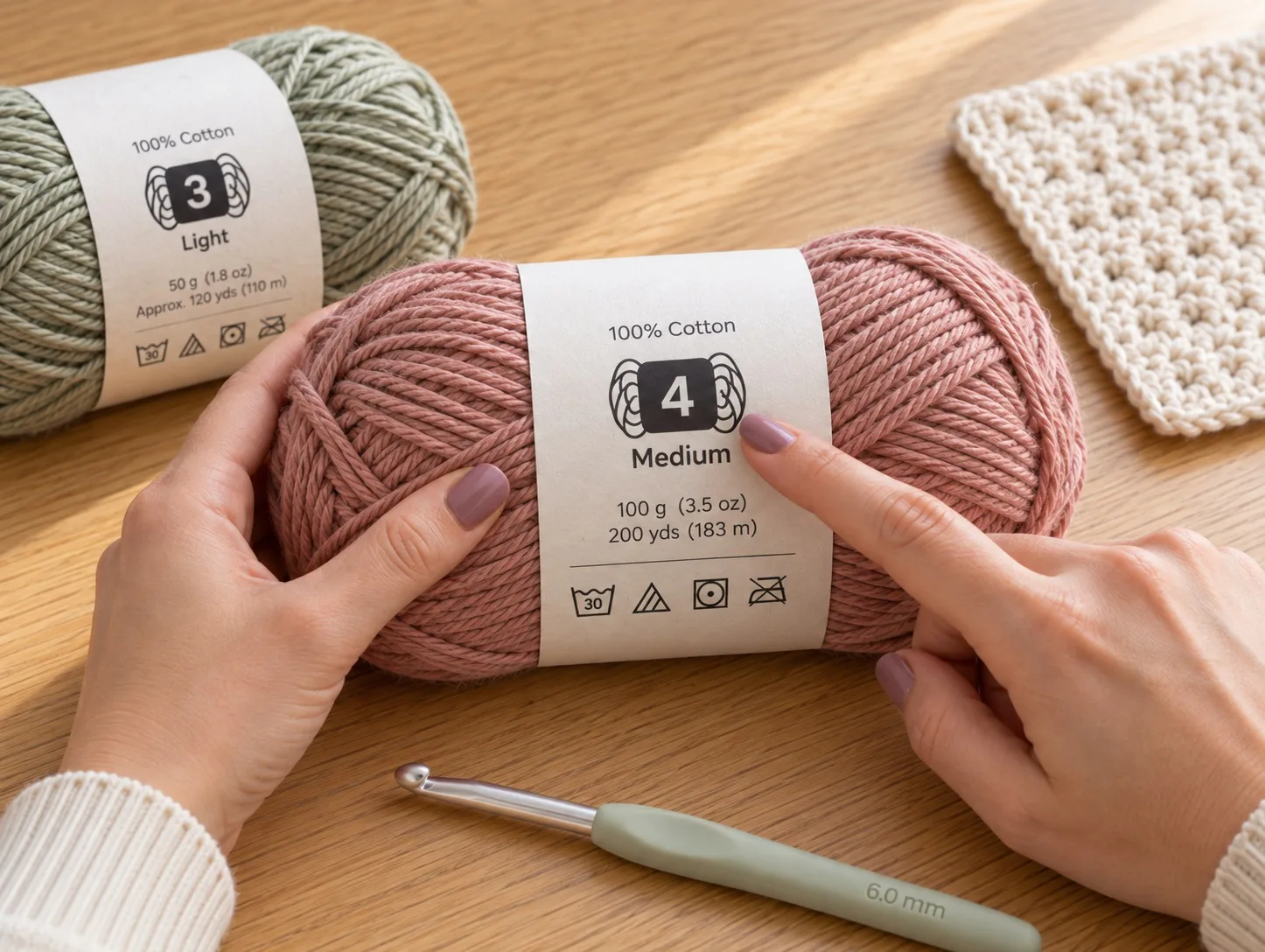 01Step 1
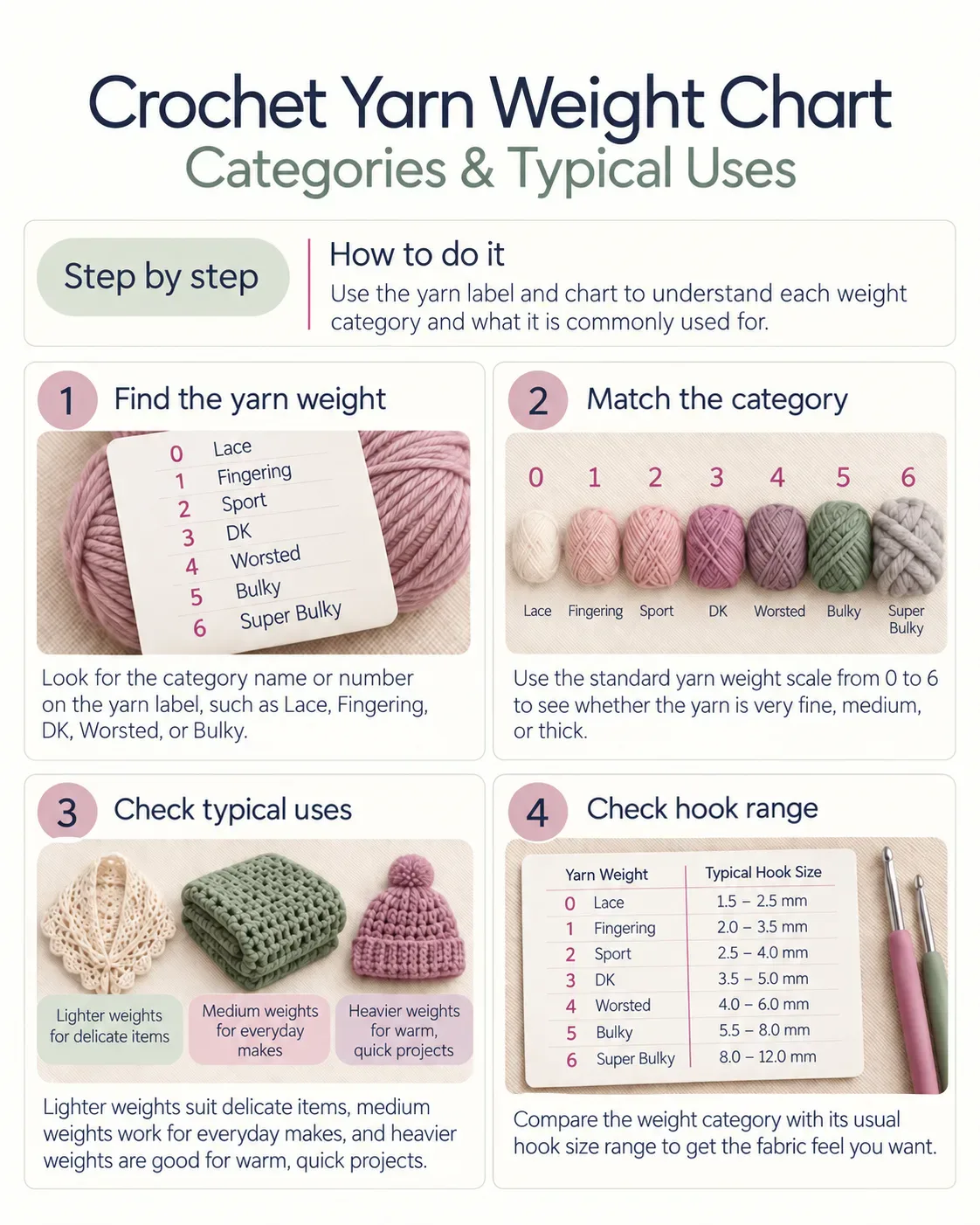
Find the yarn weight category number or descriptive weight on the ball band.
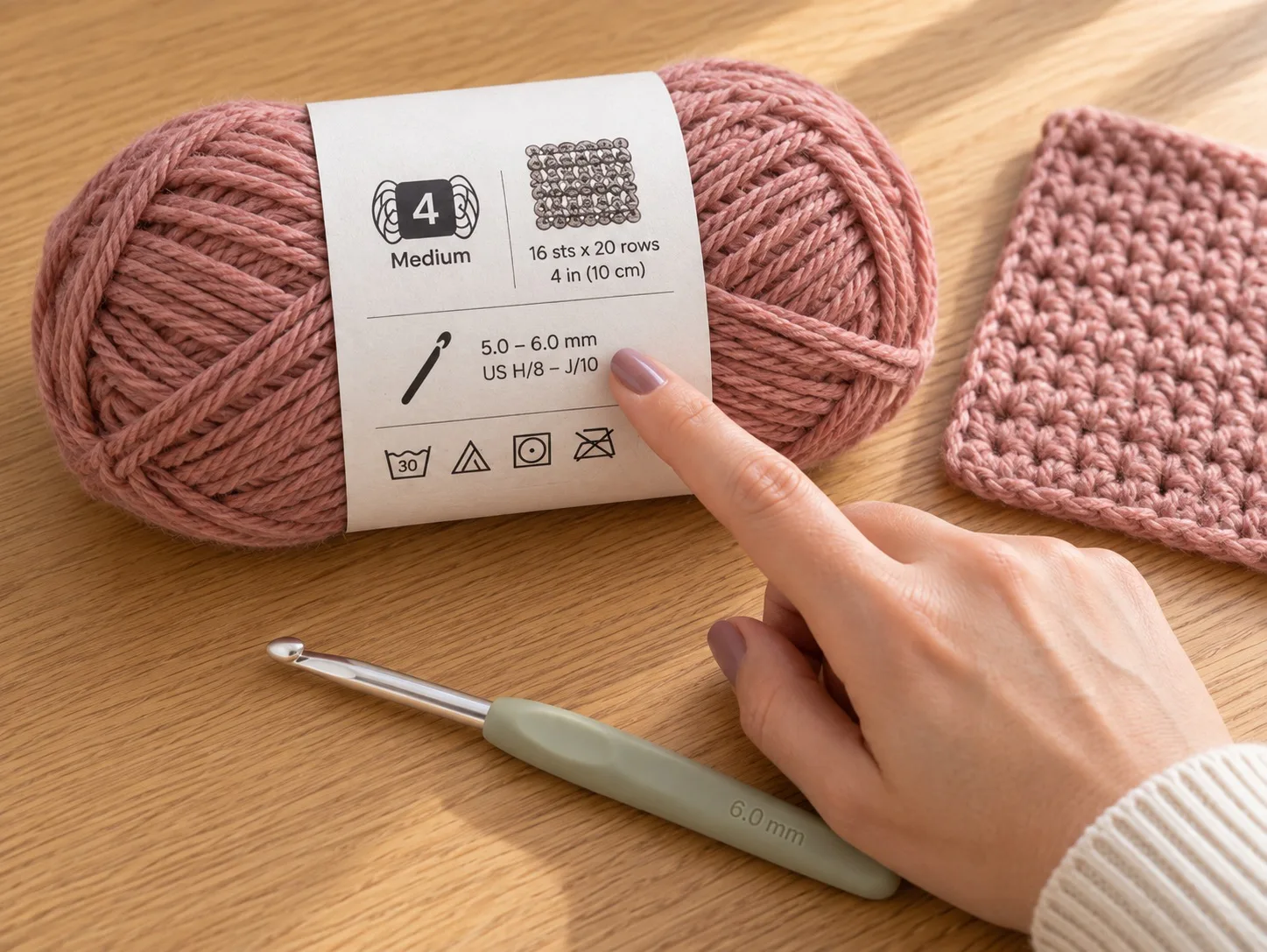 02Step 2
Compare the recommended gauge and hook range, not only the category name.
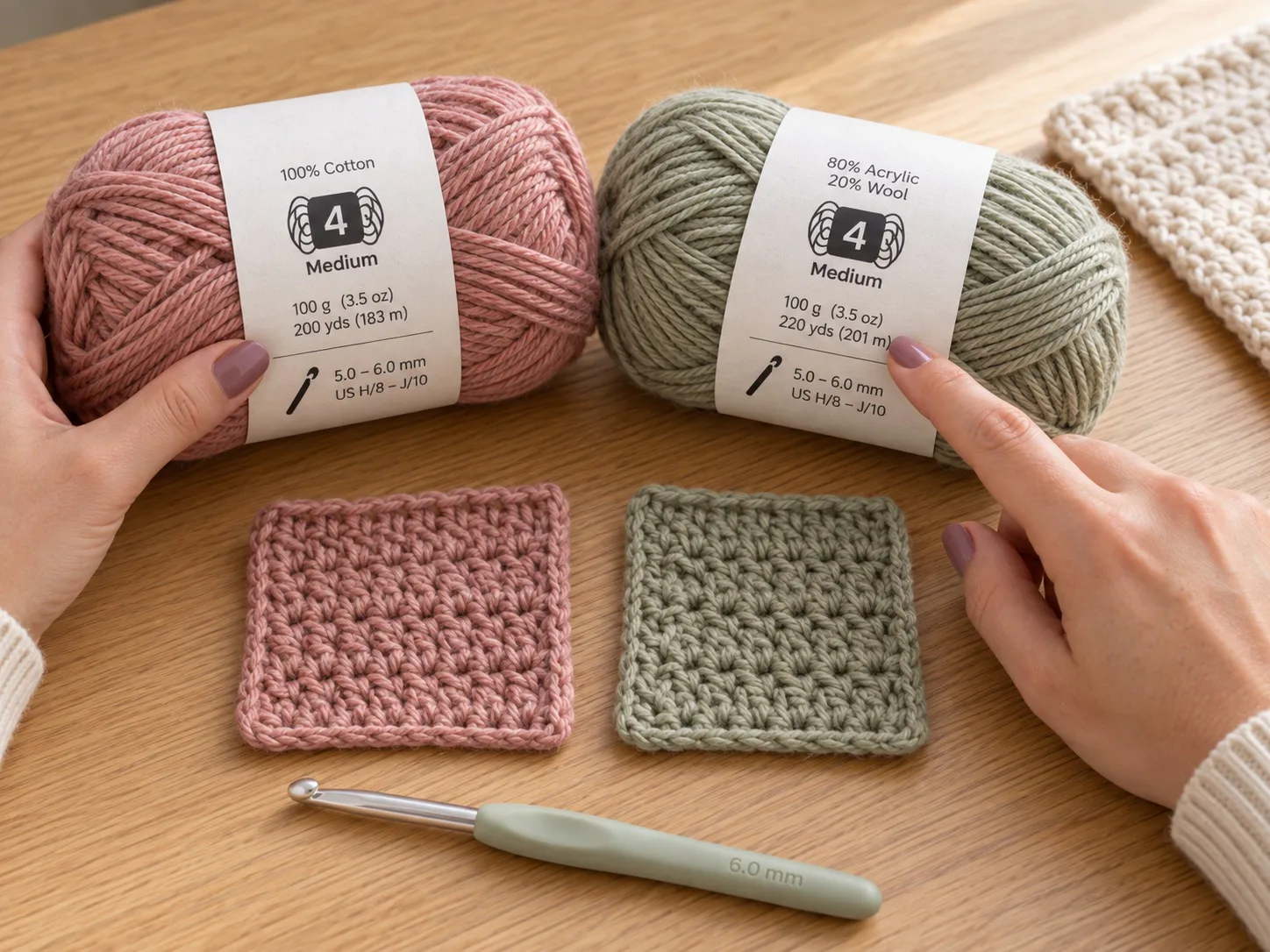 03Step 3
For substitutions, compare fiber content, meters or yards per weight, and the fabric the project requires.
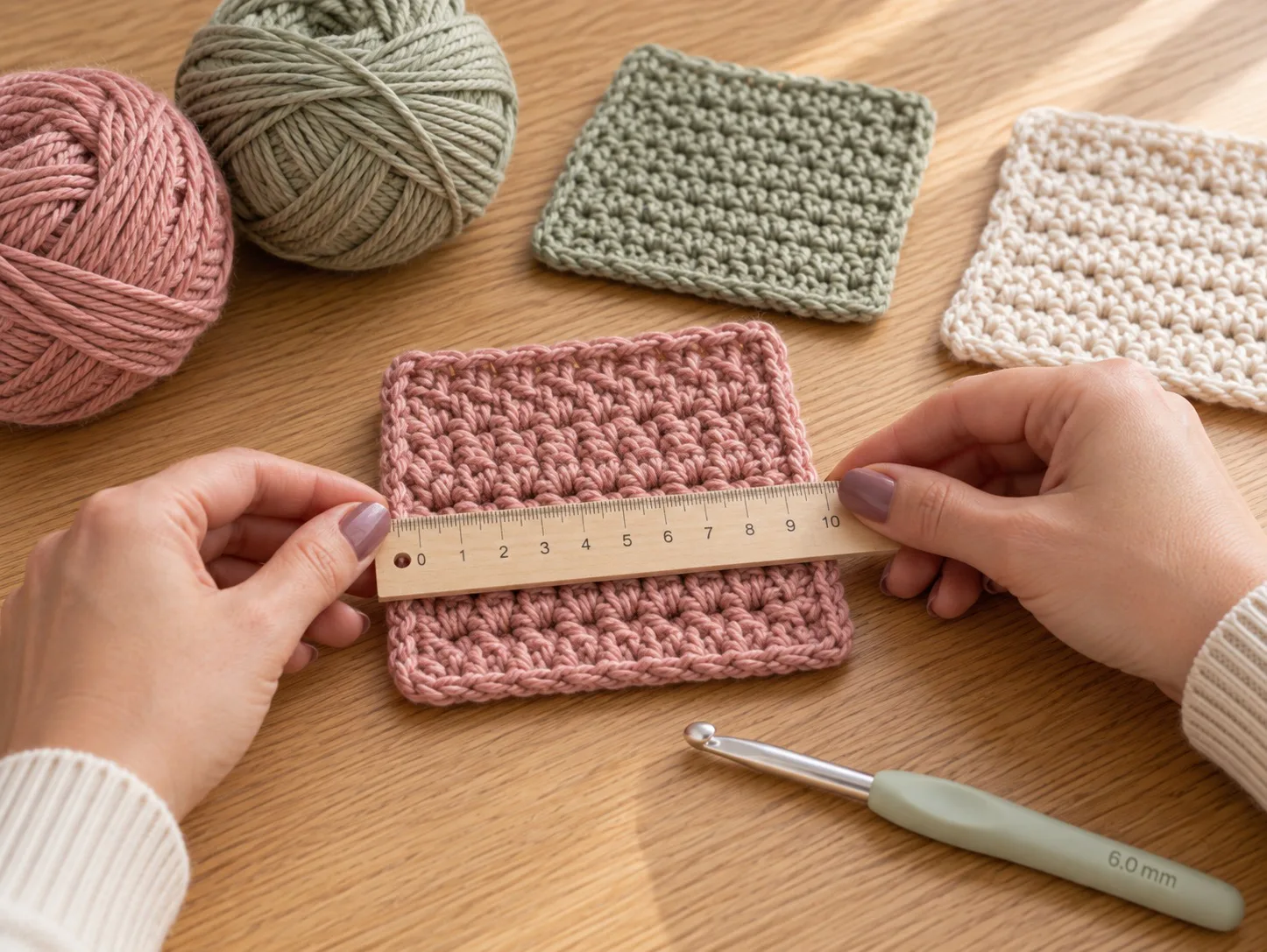 04Step 4
Make a swatch whenever finished size or drape matters.
Make it easier
- When substituting, compare yardage per 100 g as another clue to thickness.
- Fiber type can change drape and stretch even when two yarns share a weight category.
What usually goes wrong
- Assuming all category 4 yarns are identical
- Ignoring fiber content when replacing the original yarn
Questions about crochet yarn weight chart: categories & typical uses
What yarn weight should a beginner use for crochet?+
Medium or worsted-weight yarn is often easy to see and handle for practice. Pair it with a hook size that suits the yarn label and the fabric you want.
Can I substitute a different yarn weight in a crochet pattern?+
You can, but changing yarn weight changes gauge, fabric thickness, drape, and finished size. Make a gauge swatch and adjust the hook or stitch count when size matters.
Are yarn weight numbers the same as ply?+
Not exactly. Weight categories describe yarn thickness ranges, while ply describes how strands are constructed and can vary by region. Use the yarn label gauge and actual thickness as the practical guide.
Does a thicker yarn always need a larger crochet hook?+
Usually, but the pattern and desired fabric matter. A smaller hook makes denser fabric and a larger hook makes a looser, more flexible fabric.
Build the next connected skill.
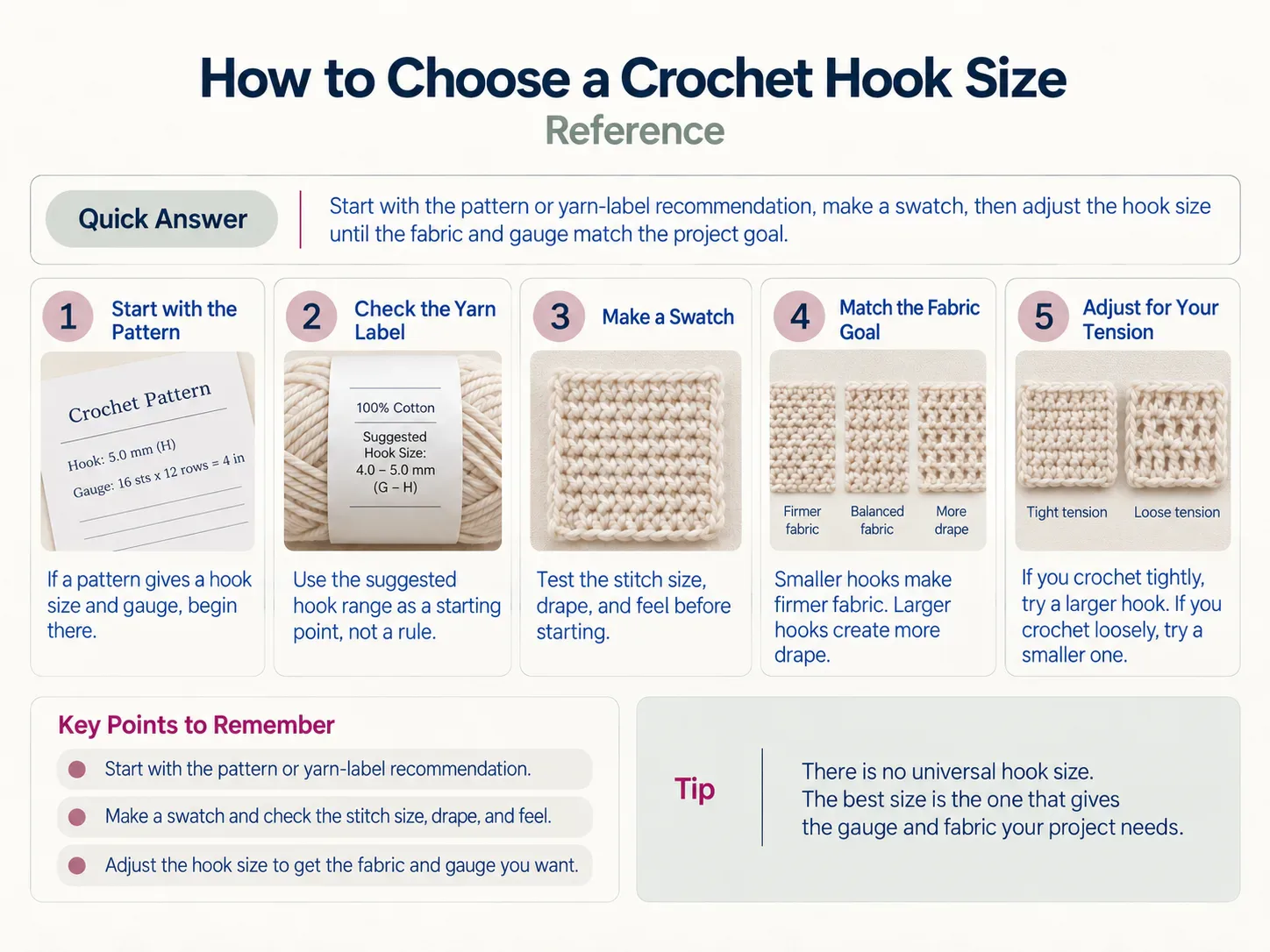
How to Choose a Crochet Hook Size
Choose a crochet hook size using the yarn label, pattern gauge, fabric goal, and your own tension instead of relying on one universal chart.
Open guide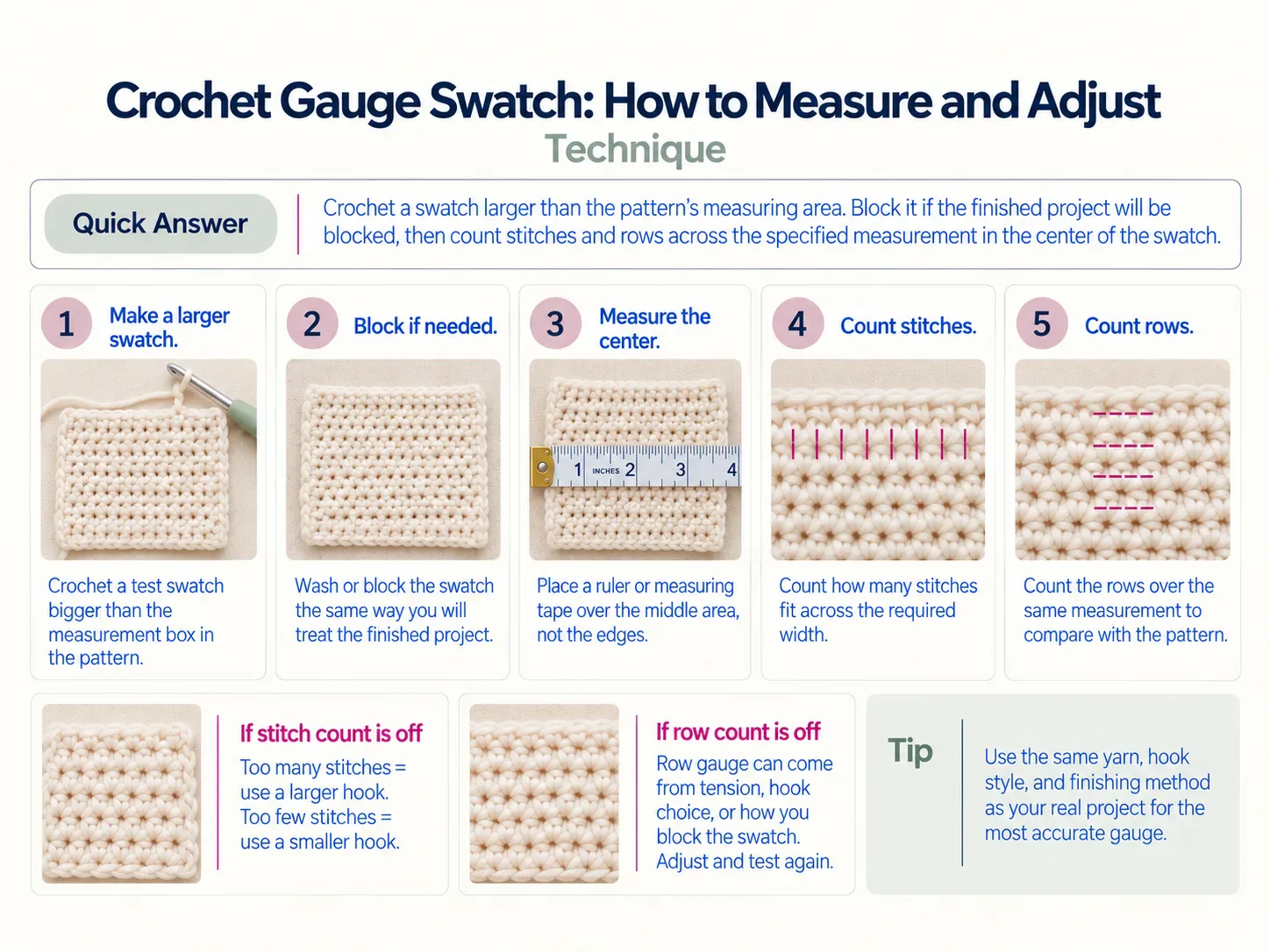
Crochet Gauge Swatch: How to Measure and Adjust
Learn how to make and measure a crochet gauge swatch, then adjust hook size or tension when your stitch and row counts do not match the pattern.
Open guide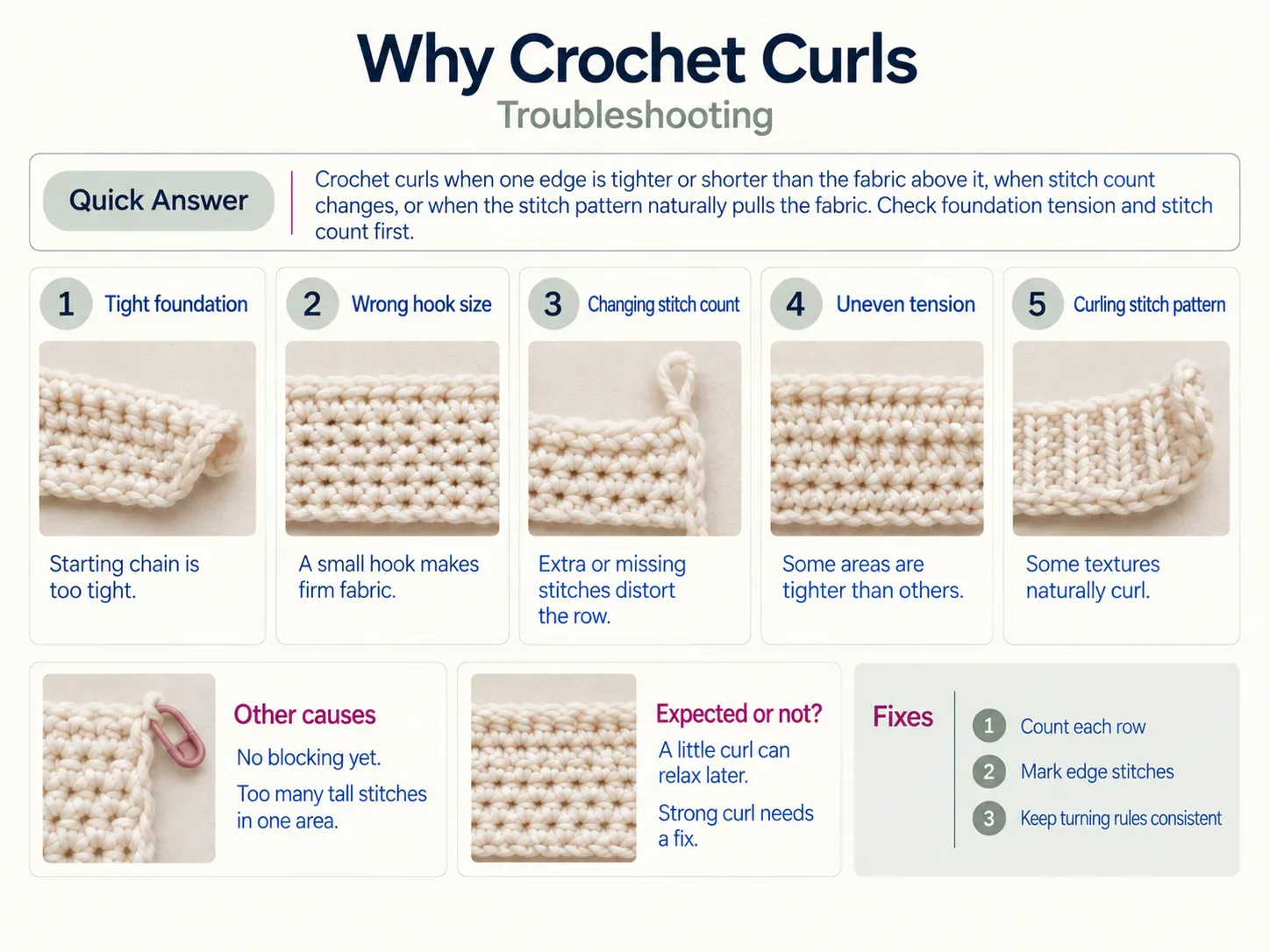
Why Is My Crochet Curling? 7 Causes and Fixes
Diagnose crochet curling caused by tight foundations, hook size, stitch count, tension, stitch pattern, or blocking, and decide when curling is expected.
Open guide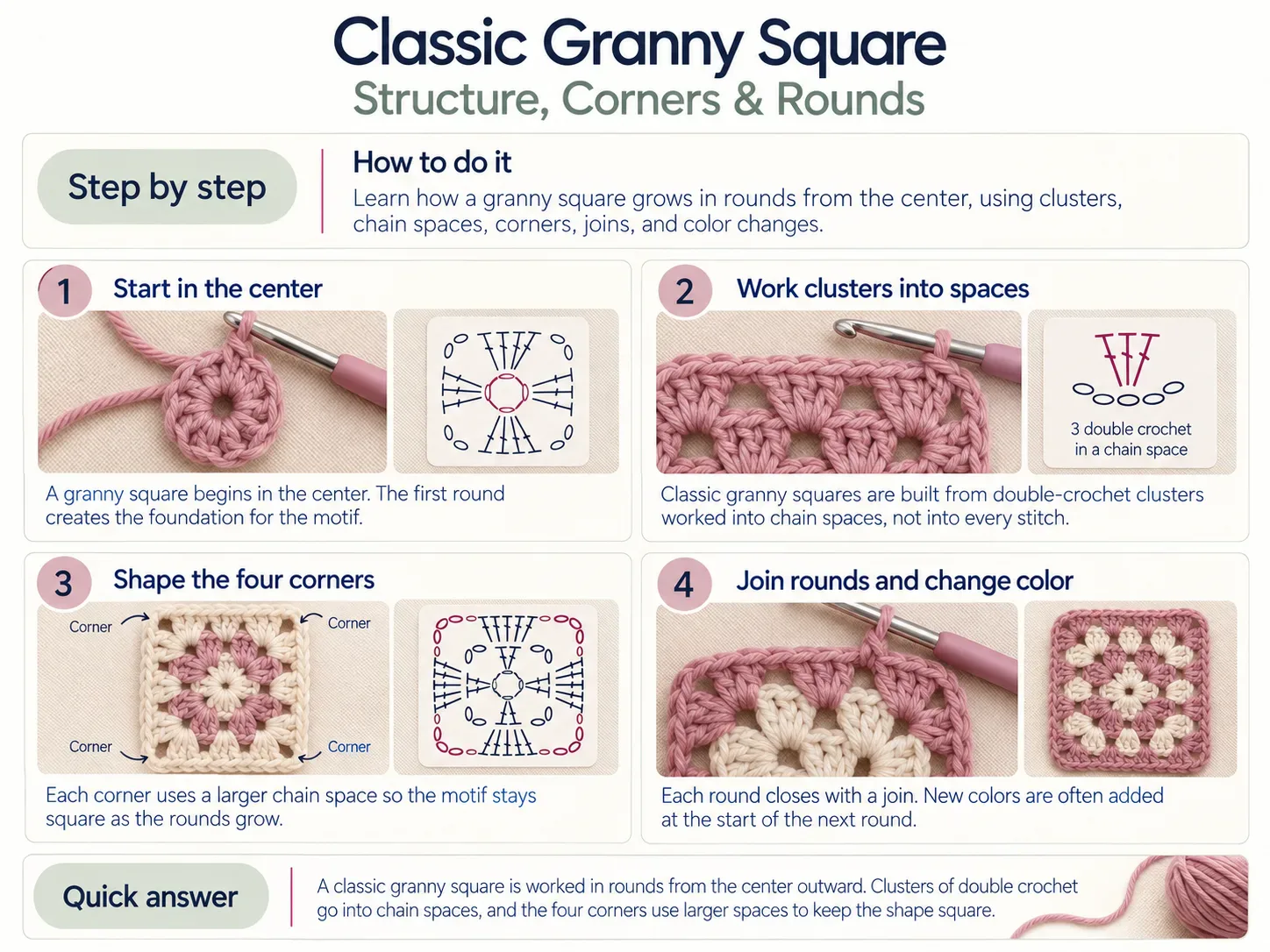
Classic Granny Square: Structure, Corners & Rounds
Understand the structure of a classic granny square, including double-crochet clusters, chain spaces, corners, round joins, and color changes.
Open guide