
Half Double Crochet (hdc) Tutorial
Learn half double crochet with the correct yarn-over sequence, stitch anatomy, turning guidance, and fixes for uneven rows.
Follow the written lesson for each stitch. US crochet terms are used unless stated otherwise.
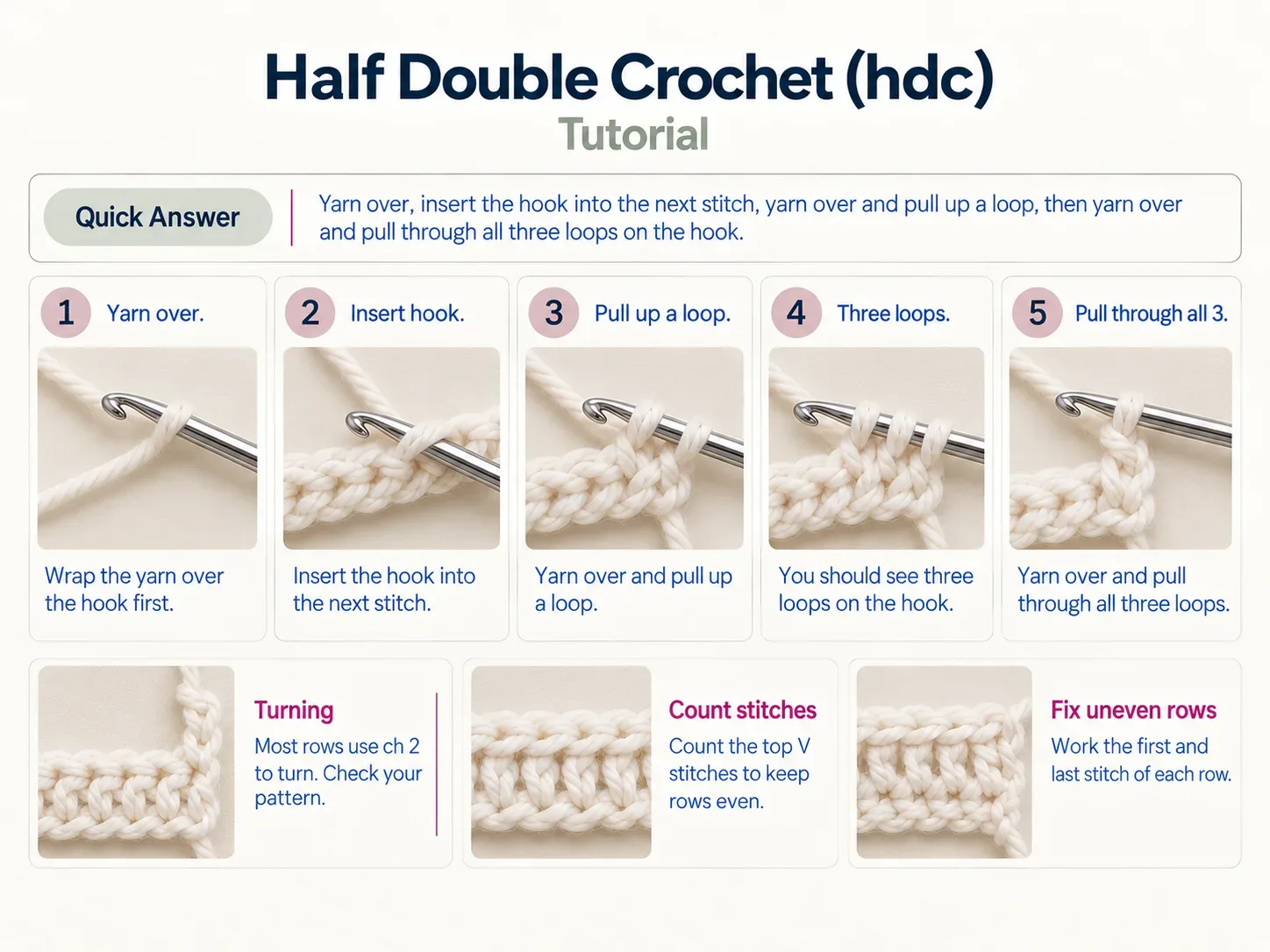
Yarn over, insert the hook into the next stitch, yarn over and pull up a loop, then yarn over and pull through all three loops on the hook.

Watch half double crochet tutorial
Prefer to learn by watching? Open the full lesson, then use this page for quick reference, tips, common mistakes, and FAQs.
Mini lesson sheet
Keep each complete first instruction alongside the accompanying reference illustration.
- Use this as a quick check before the full lesson.
- Keep it nearby while you practice the stitch or technique.
Finished result
Key facts
Details that prevent common beginner mistakes
Check all three loops
In US hdc, yarn over before inserting the hook; after drawing up yarn there are three loops on the hook. A final yarn over passes through all three. The starting chain counts only if your pattern explicitly says so.
Make it easier
- Lift each pulled-up loop to roughly the same height before the final yarn over.
- If a pattern uses the third loop, look for the horizontal strand behind the normal top V.
What usually goes wrong
- Forgetting the initial yarn over
- Pulling through only two loops instead of all three
- Confusing the back loop with the third loop
Questions about half double crochet tutorial
What is half double crochet?+
Half double crochet is a medium-height stitch made by yarning over, inserting the hook, pulling up a loop, then yarning over and pulling through all three loops on the hook.
What is the abbreviation for half double crochet?+
In US terminology it is abbreviated hdc. In UK terminology the comparable stitch is usually called half treble crochet, abbreviated htr.
How many turning chains do I use for half double crochet?+
Many patterns use one or two turning chains. Follow the pattern because whether the turning chain counts as a stitch varies by designer.
Why is my half double crochet leaning?+
Uneven tension, pulling the first loop too tall, or missing edge stitches can make the fabric lean. Keep loop height consistent and count each row.
Do I work half double crochet through both loops?+
Usually yes unless the pattern specifies front loop only, back loop only, third loop, or another insertion point.
Is half double crochet faster than single crochet?+
Usually yes because it is taller, so fewer rows are needed to build the same height of fabric.
Use this technique in a complete crochet project.
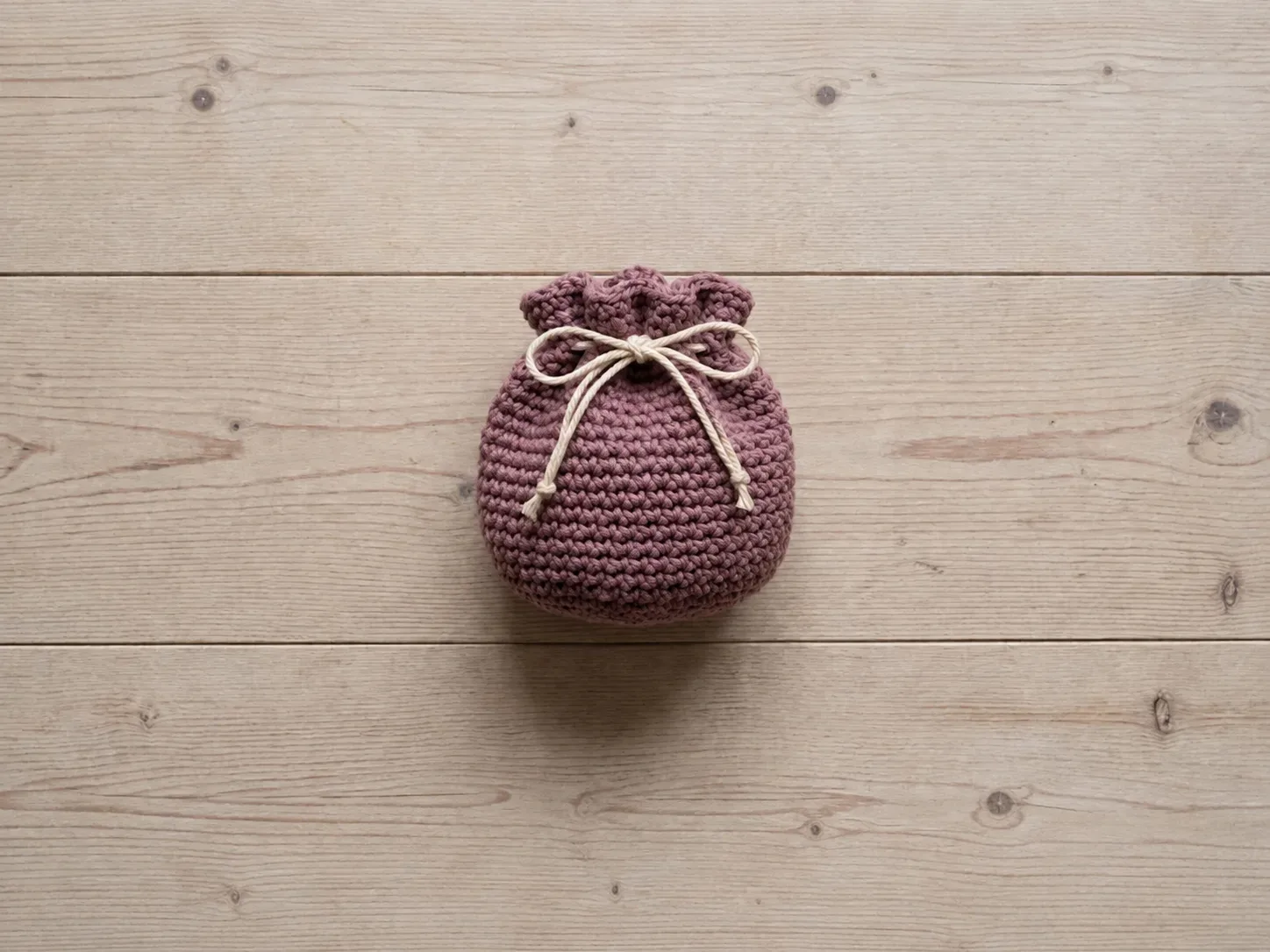
Drawstring Notions Pouch
A small round pouch for stitch markers, needles, and tiny crochet extras, finished with a simple drawstring closure.
Make this project
Easy Ribbed Crochet Pumpkin
A soft beginner-friendly ribbed crochet pumpkin worked as a textured rectangle, gathered into shape, and finished with a stem and leaf for autumn and Thanksgiving decorating.
Make this project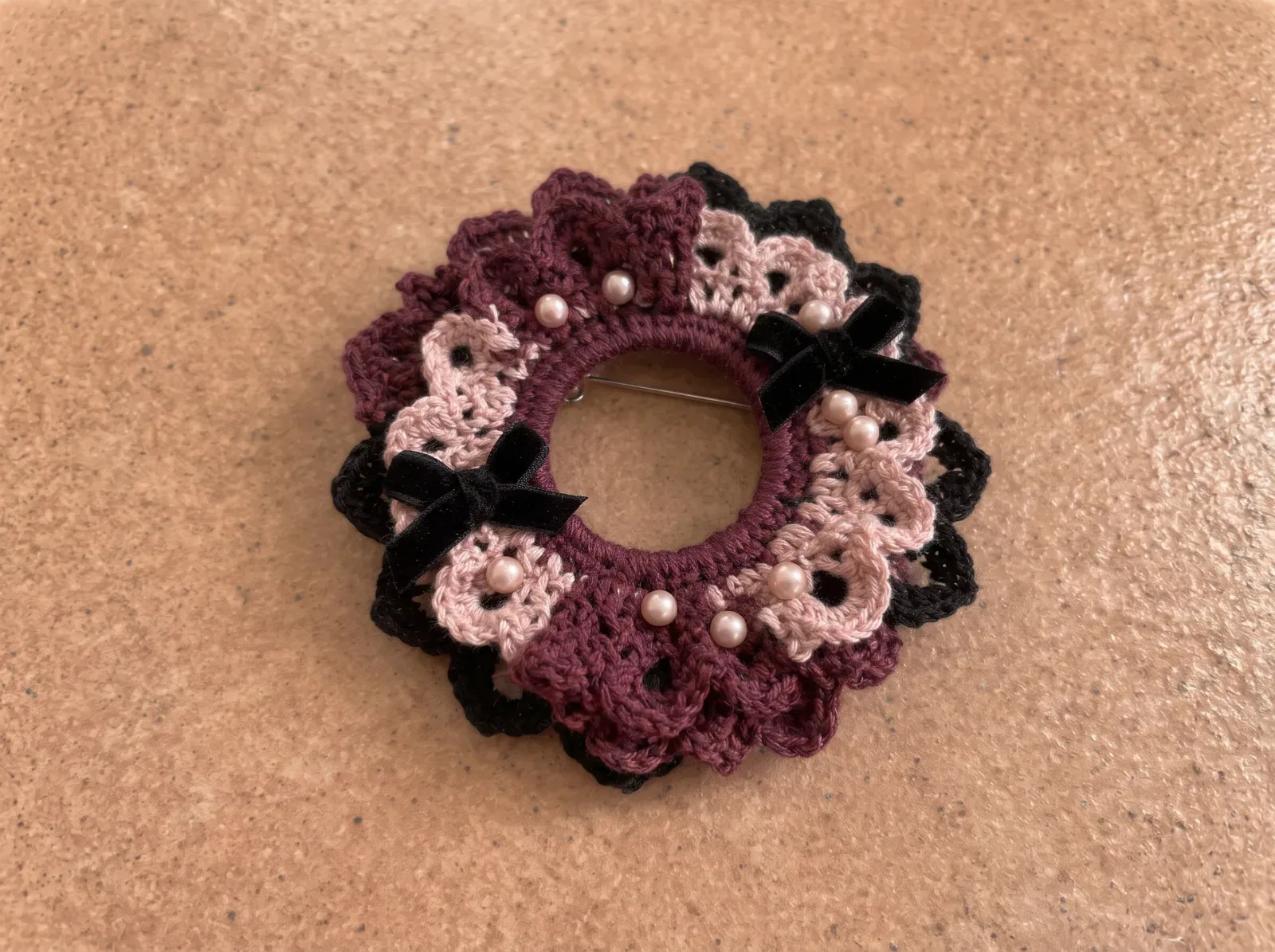
Romantic Lace Wreath Brooch
Romantic Lace Wreath Brooch: A layered circular crochet brooch with twelve burgundy scallops, ten contrast shell petals, two small five-petal flowers and optional pearls and ribbon bows. Follow the US-terminology written stitch instructions, components and assembly notes below.
Make this projectBuild the next connected skill.
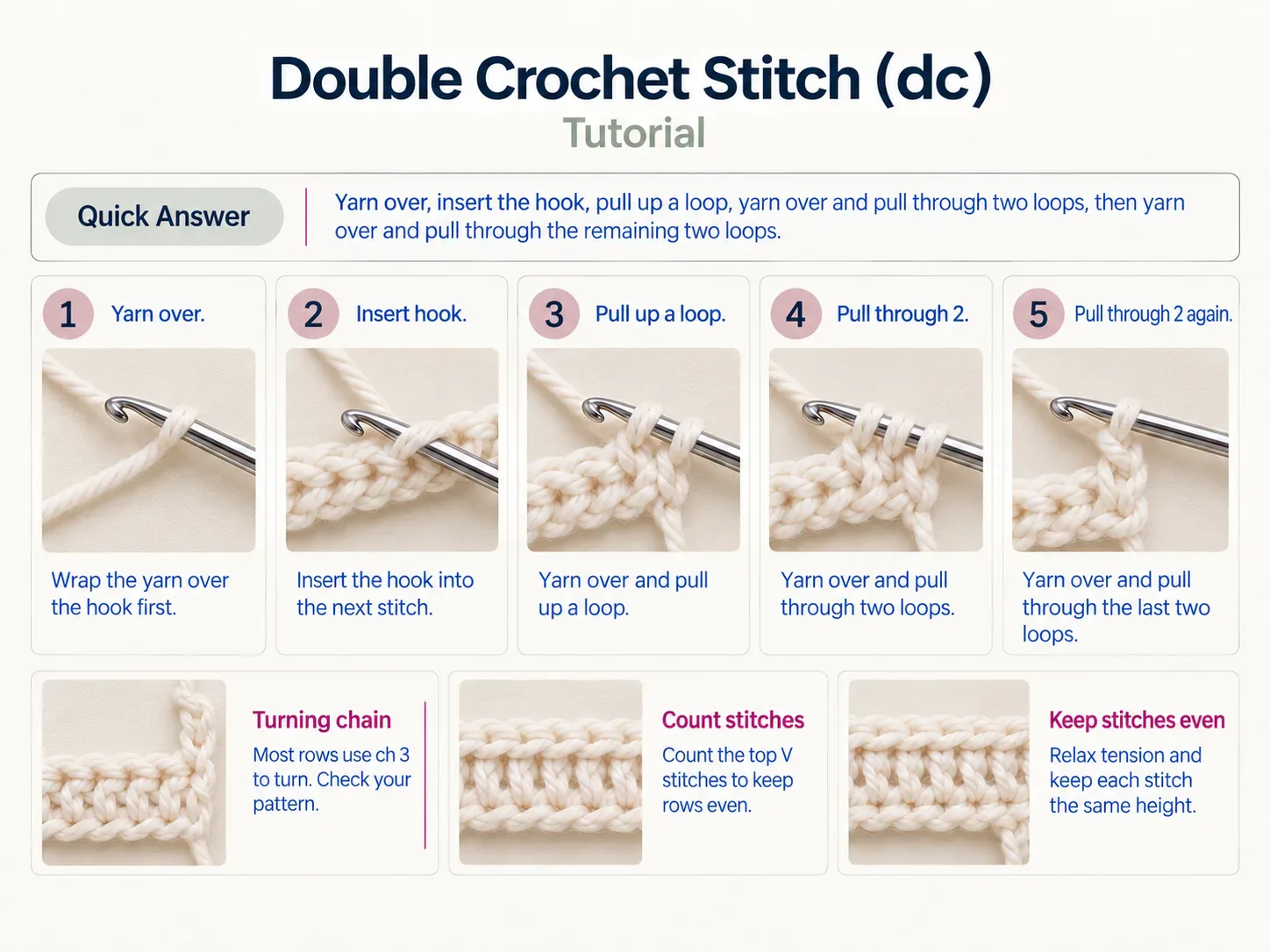
How to Double Crochet (dc): Step-by-Step
Learn how to double crochet with the correct yarn-over sequence, turning height, stitch counting, and simple fixes for gaps or uneven tall stitches.
Open guide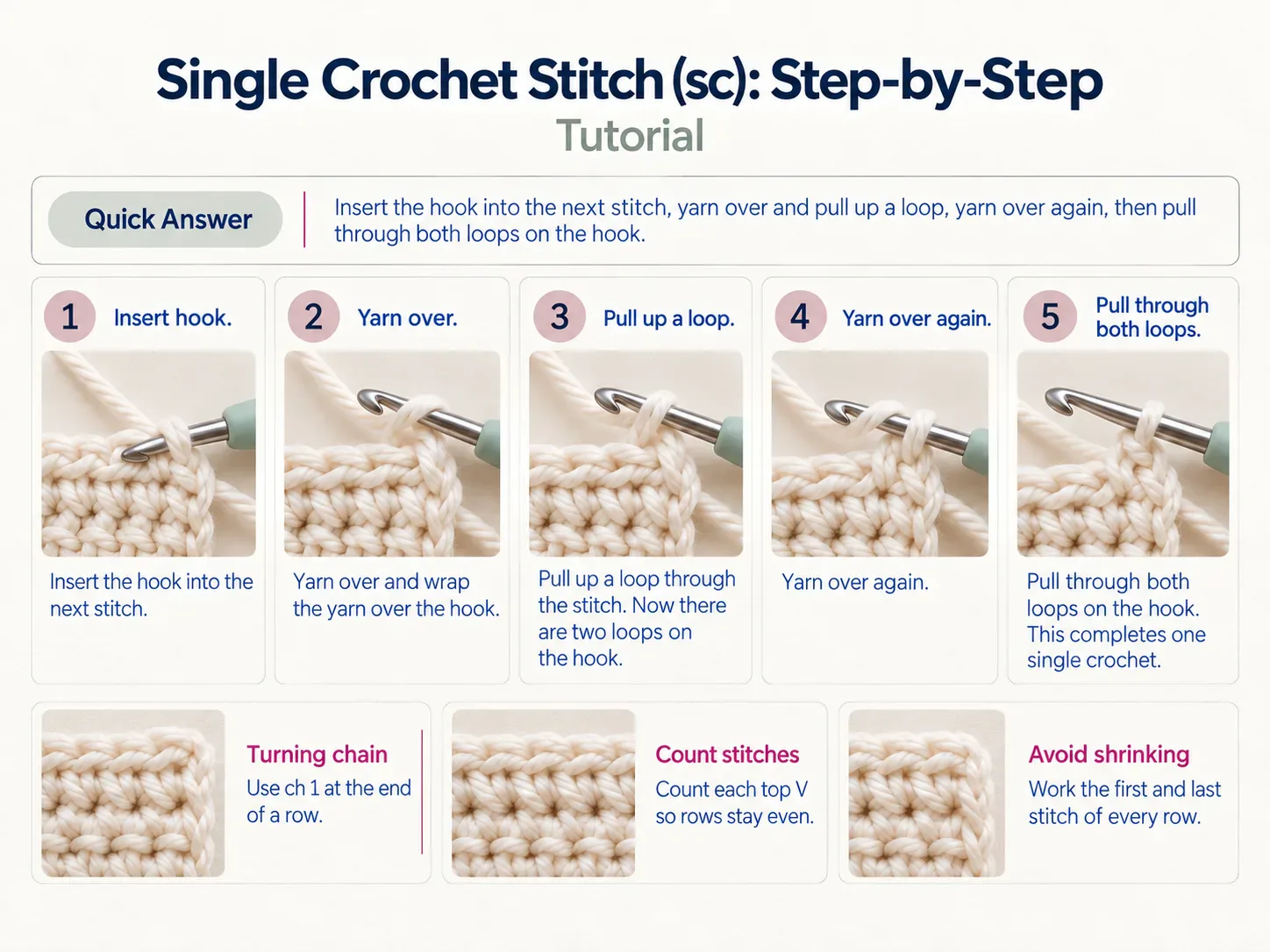
How to Single Crochet (sc): Step-by-Step
Learn how to single crochet with clear guidance on hook insertion, yarn overs, turning rows, stitch counting, and keeping beginner edges straight.
Open guide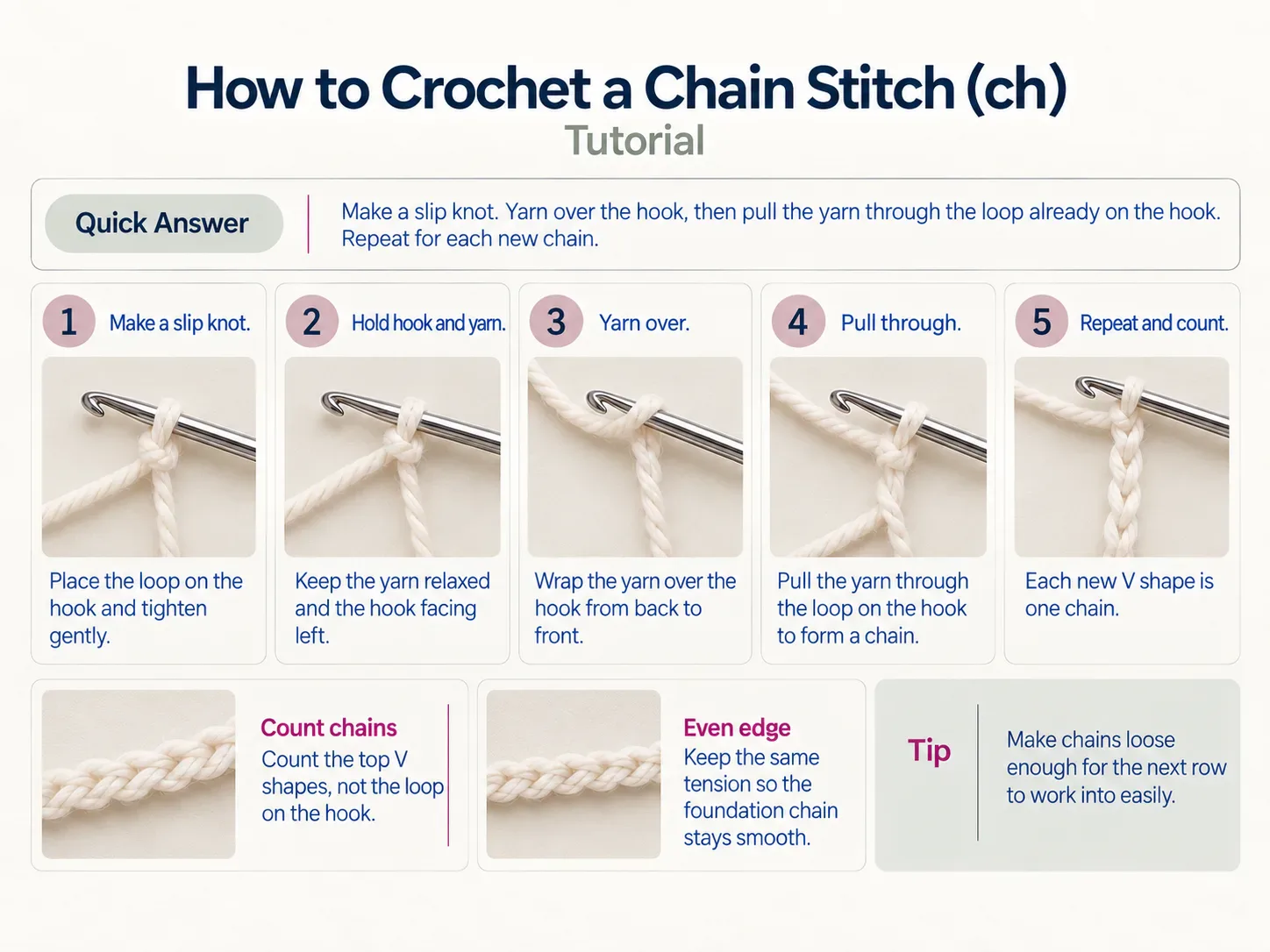
How to Start a Crochet Chain (Chain Stitch)
Learn how to start a crochet chain, make even chain stitches, count the foundation correctly, and avoid a tight or twisted starting edge.
Open guide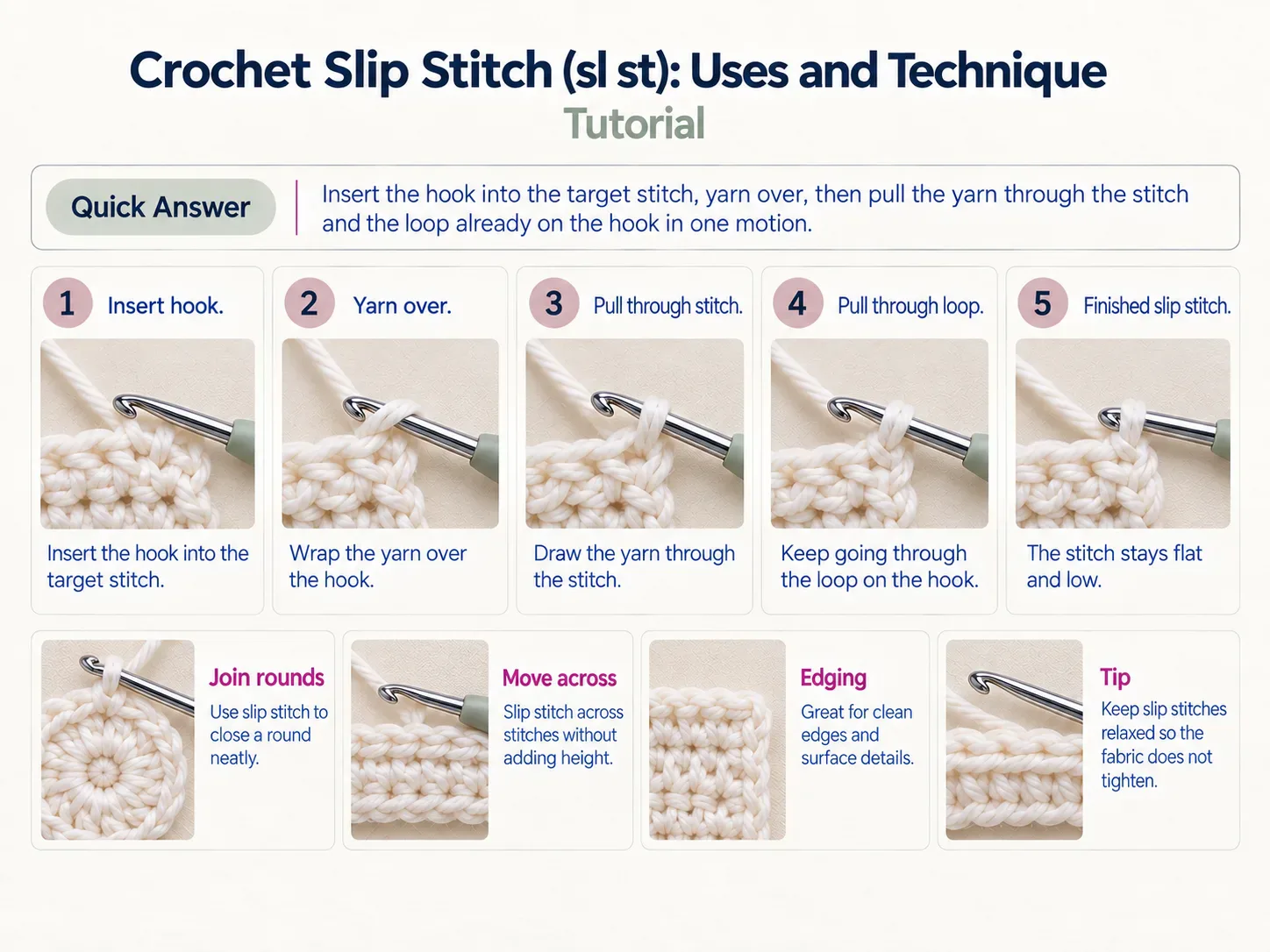
How to Slip Stitch in Crochet (sl st)
Learn how to make a crochet slip stitch and use it for joining rounds, moving across stitches, edging, surface details, and low-profile finishing.
Open guide