How to Read Crochet Patterns: Abbreviations, Repeats & Counts
A beginner-friendly guide to crochet pattern structure, abbreviations, repeats, parentheses, brackets, stitch counts, and instruction order.
Follow the written lesson for each stitch. US crochet terms are used unless stated otherwise.
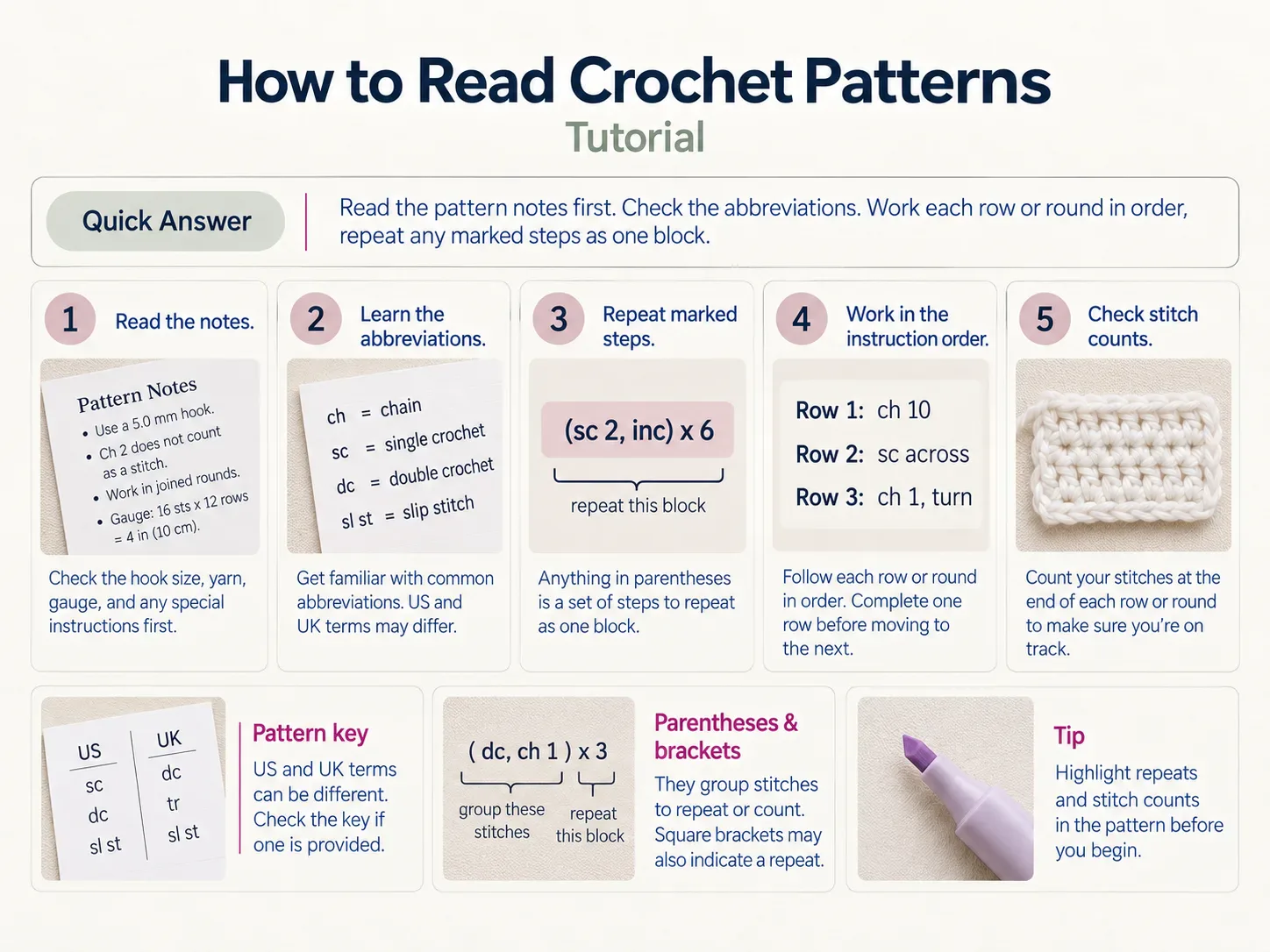
Start with the pattern notes, confirm whether the terms are US or UK, review the abbreviations and special stitches, then work one row or round at a time. Treat asterisks, brackets, and parentheses as grouped instructions or repeats exactly as the designer defines them, and use the stated stitch count as a checkpoint before moving on.
How to Read Crochet Patterns
Abbreviations, Repeats & Counts
Abbreviations
Learn the symbols, read with confidence.
Pattern Example
Same pattern. So many possibilities.
Repeats
An asterisk (*) marks the section to repeat.
Row & Stitch Counts
Counts in parentheses tell you how many stitches you should have.
Stitch Diagram
See how the repeat is shown in a stitch chart.
Finished result
Key facts
Details that prevent common beginner mistakes
Read the pattern header before Row 1
Check the yarn and hook, finished size, gauge, terminology, abbreviations, special stitches, and notes before you begin. Those details often define rules—such as whether a turning chain counts as a stitch—that change how later instructions should be read.
Decode repeats as complete instruction blocks
Asterisks, brackets, and parentheses usually group instructions that repeat or belong together. Read the whole grouped section before crocheting it, then repeat only the portion and number of times the pattern specifies.
Use stitch counts as checkpoints
When a pattern gives an end-of-row or end-of-round stitch count, compare your work before continuing. A mismatch is easier to correct immediately than after several more rows have been built on top of it.
Verify repeats before starting
Example: [sc, inc] × 6 uses 12 base stitches and produces 18 stitches. An increase means two single crochets in the same base stitch; checking both consumed and produced counts catches missed repeats.
Translate the shorthand into plain language
Work one single crochet in the next stitch, chain 1, then repeat that same two-part sequence across the row.
Work all of the instructions inside the parentheses into the same next space unless the pattern says otherwise.
Finish the row or round with 24 stitches, then confirm that count before starting the next instruction.
How to do it
- Step 1 image01Step 1
Read the materials, gauge, size, terminology, and special-stitch notes before beginning.
- Step 2 image02Step 2
Confirm whether the pattern uses US or UK crochet terminology.
- Step 3 image03Step 3
Scan the abbreviation list and identify any stitches or techniques you need to review.
- Step 4 image04Step 4
Work one row or round at a time. Follow commas as sequencing breaks rather than stopping points.
- Step 5 image05Step 5
Repeat instructions between asterisks, brackets, or parentheses exactly as the designer specifies.
- Step 6 image06Step 6
Check the stitch count at the end of each row or round before moving on.
- Step 7 image07Step 7
Use a row counter, notes, or check marks for long repeats so you know exactly where you stopped.
Make it easier
- Highlight the size you are making when several size numbers appear on one line.
- Rewrite a complicated repeat in plain language before starting the row.
- Stop immediately if your stitch count is wrong; the next row rarely fixes the problem automatically.
What usually goes wrong
- Skipping pattern notes and assuming a standard turning-chain rule
- Confusing stitch-count parentheses with repeat parentheses
- Continuing after a wrong stitch count
Questions about how to read crochet patterns: abbreviations, repeats & counts
What does * to * mean in crochet patterns?+
It usually means repeat the instructions between the asterisks. The pattern may tell you how many times to repeat or where to stop.
What does “rep” mean?+
“Rep” is a common abbreviation for repeat.
How do I know if a crochet pattern uses US or UK terms?+
Look in the pattern notes, abbreviation key, or terminology section. Do not infer the system from a single abbreviation because stitch names differ between US and UK crochet terminology.
What do numbers in brackets or parentheses mean?+
They may show a stitch count, a size-specific value, or a grouped instruction. The pattern key and surrounding sentence determine which meaning applies.
Build the next connected skill.
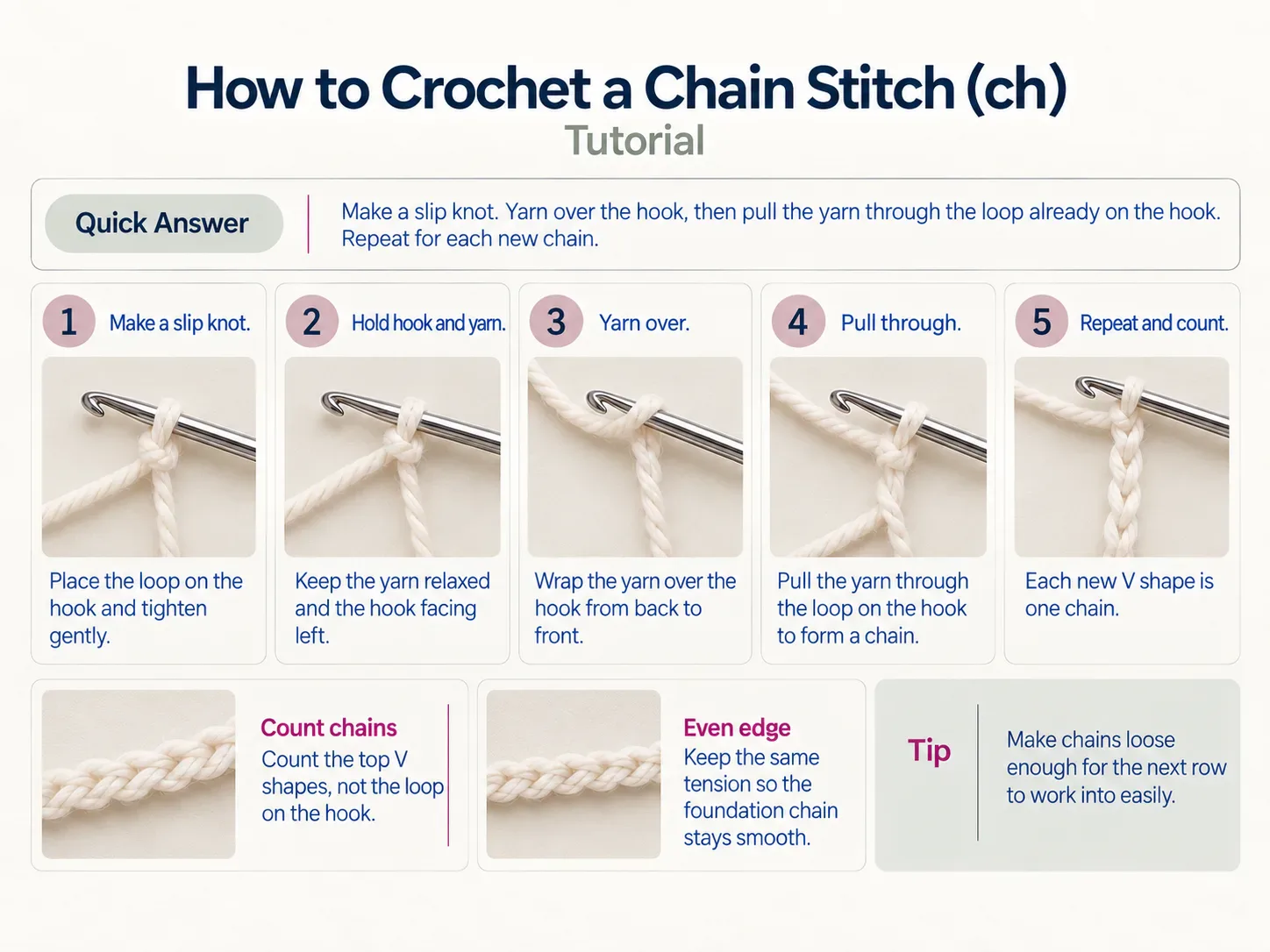
How to Start a Crochet Chain (Chain Stitch)
Learn how to start a crochet chain, make even chain stitches, count the foundation correctly, and avoid a tight or twisted starting edge.
Open guide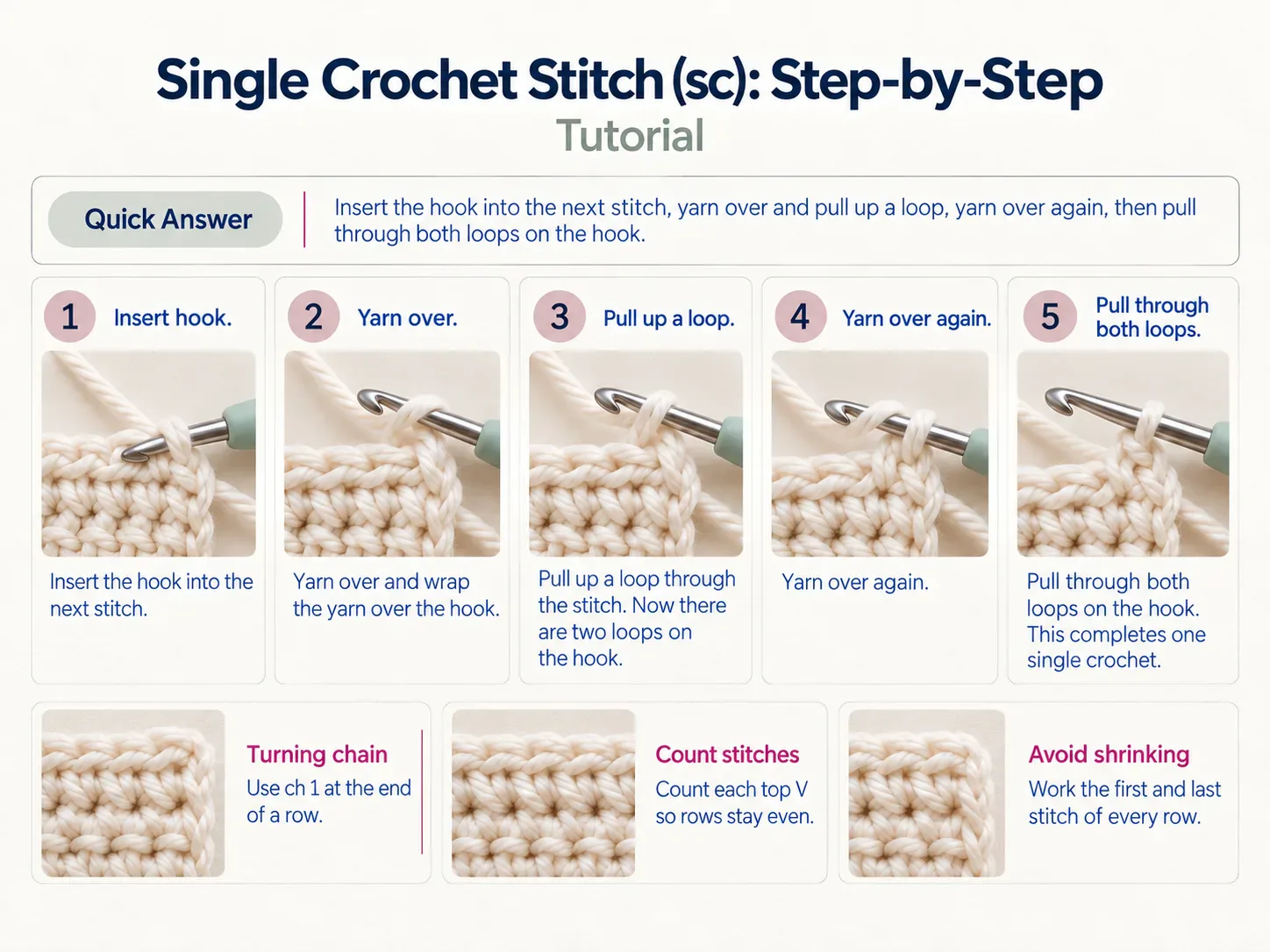
How to Single Crochet (sc): Step-by-Step
Learn how to single crochet with clear guidance on hook insertion, yarn overs, turning rows, stitch counting, and keeping beginner edges straight.
Open guide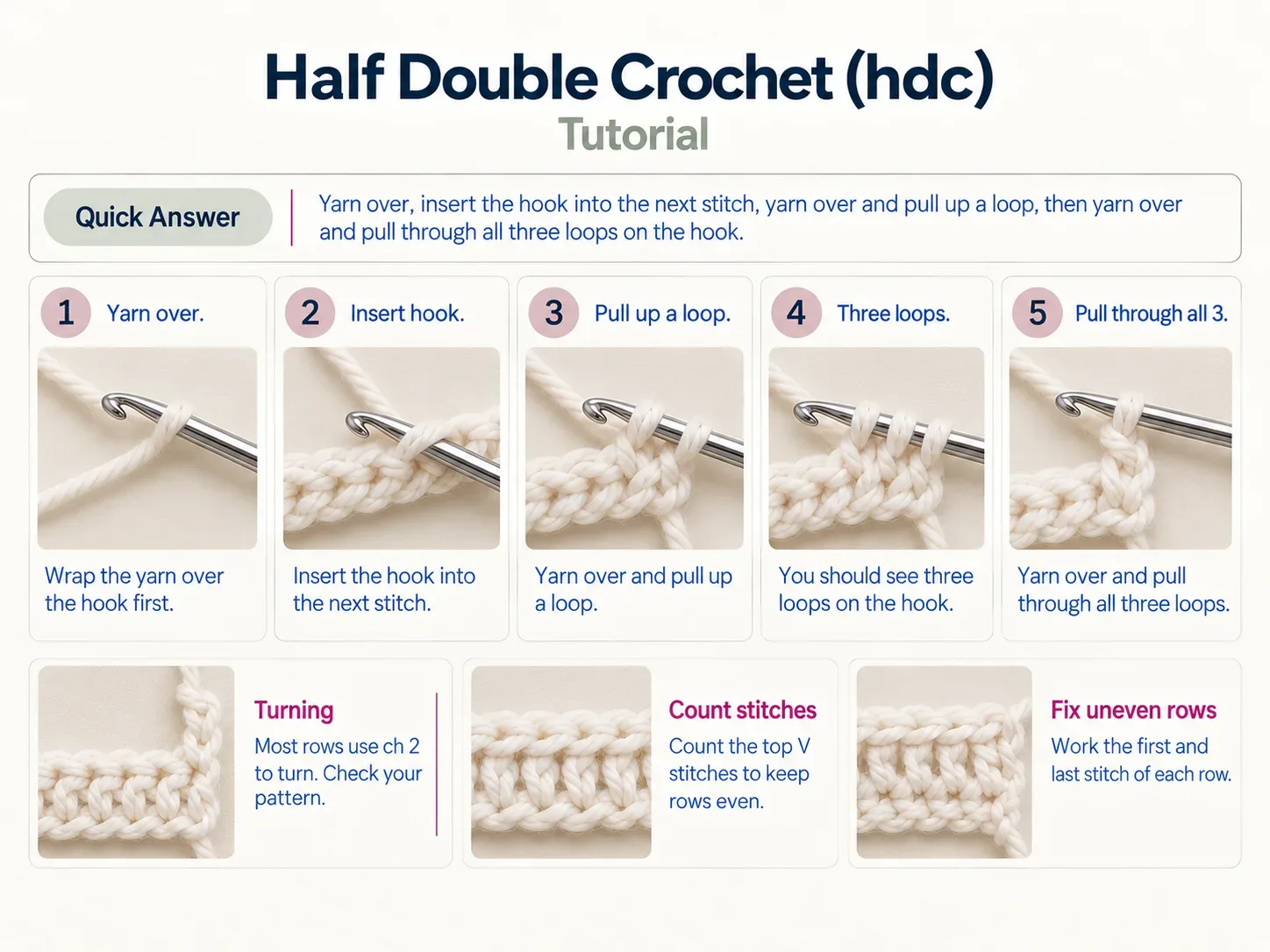
Half Double Crochet (hdc) Tutorial
Learn half double crochet with the correct yarn-over sequence, stitch anatomy, turning guidance, and fixes for uneven rows.
Open guide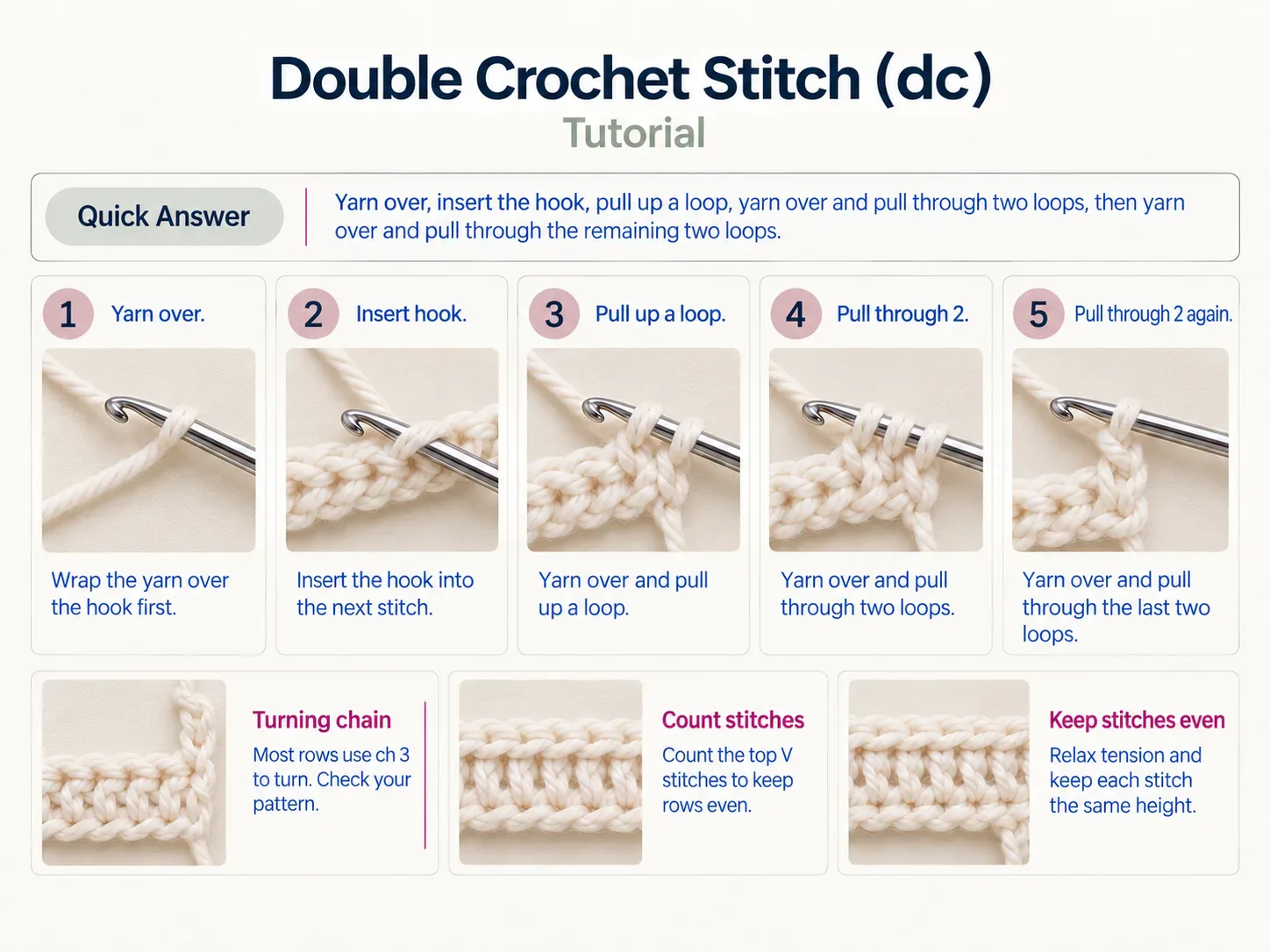
How to Double Crochet (dc): Step-by-Step
Learn how to double crochet with the correct yarn-over sequence, turning height, stitch counting, and simple fixes for gaps or uneven tall stitches.
Open guide