
How to Weave In Crochet Ends Securely
Learn a practical method for weaving in crochet yarn tails so they stay hidden, survive normal use, and do not create bulky spots.
Follow the written lesson for each stitch. US crochet terms are used unless stated otherwise.
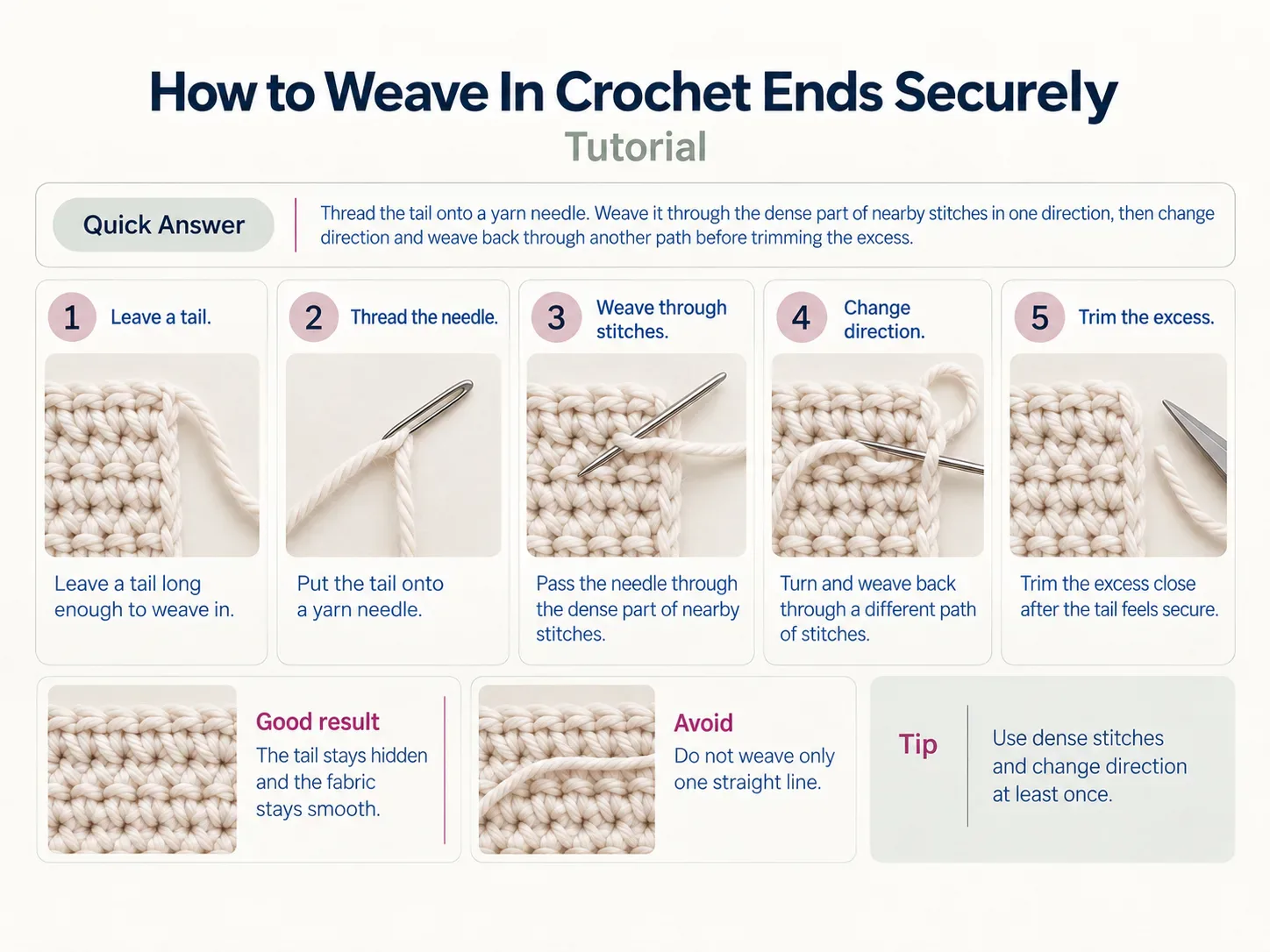
Thread the tail onto a yarn needle and weave it through the dense part of nearby stitches in multiple directions, changing direction at least once before trimming the excess.
Mini lesson sheet
Keep each complete first instruction alongside the accompanying reference illustration.
- Use this as a quick check before the full lesson.
- Keep it nearby while you practice the stitch or technique.
Finished result
Key facts
Details that prevent common beginner mistakes
Hide tails without cutting too early
Thread a yarn needle through the backs of several existing stitches, reverse direction and secure without distorting the fabric. Wear, washing and fiber affect security; do not assume this method makes suspended items load-bearing.
Materials for practice
- Yarn needle with an eye large enough for the yarn
How to do it
- Step 1 image01Step 1
Leave a tail long enough to handle comfortably, usually several inches.
- Step 2 image02Step 2
Thread the tail onto a yarn needle.
- Step 3 image03Step 3
On the wrong side of the fabric, weave through the backs or bases of several nearby stitches.
- Step 4 image04Step 4
Change direction and weave through another path so the tail is less likely to slide out.
- Step 5 image05Step 5
For slippery yarn, change direction again or split the yarn path through denser stitches.
- Step 6 image06Step 6
Gently stretch the fabric, then trim the excess tail without cutting the project stitches.
Make it easier
- Weave tails before final trimming, but consider blocking order for pieces that will change significantly when blocked.
- Avoid making a hard knot unless the project or yarn specifically calls for one.
What usually goes wrong
- Trimming the tail immediately after one short pass
- Weaving so tightly that the fabric puckers
- Running a contrasting tail through a visible area
Questions about how to weave in crochet ends securely
How do you weave in crochet ends securely?+
Thread the yarn tail onto a yarn needle and weave it through the backs of nearby stitches in more than one direction, avoiding long straight runs that can pull out easily.
How long should a yarn tail be for weaving in?+
Leave enough tail to thread comfortably through several stitches and change direction at least once. Very short tails are harder to secure.
Should I knot yarn ends before weaving them in?+
Most crochet finishing does not require a bulky knot. A well-woven tail that changes direction is usually more discreet, but follow the project requirements for high-stress items.
Can I cut the yarn tail immediately after weaving it in?+
After the tail is secure, trim it close without cutting the surrounding stitches. For washable projects, leave enough hidden length that normal movement will not pull the tail free.
Use this technique in a complete crochet project.
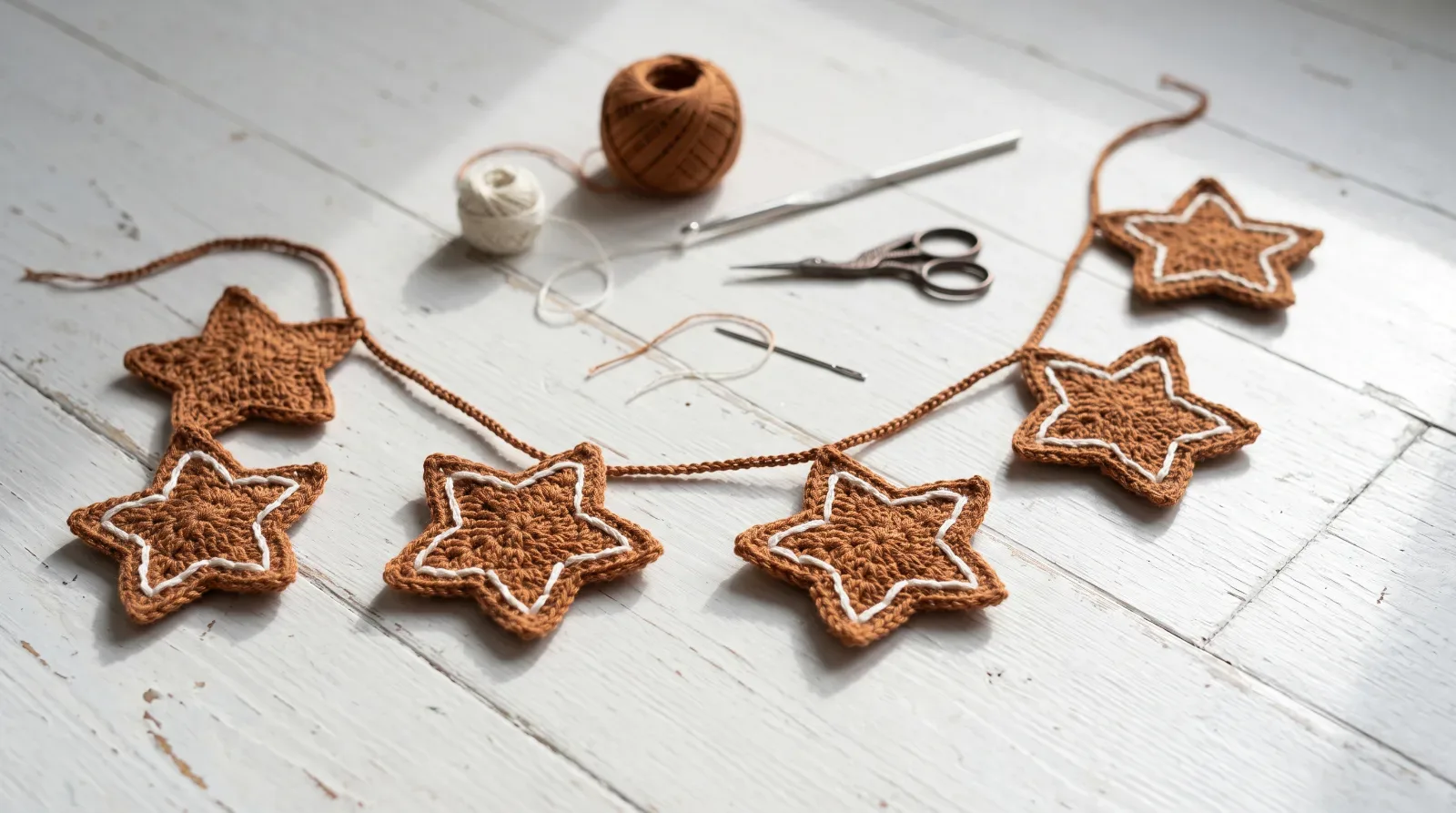
Frosted Gingerbread Star Crochet Garland
Crochet five flat, five-point gingerbread-cookie-inspired stars, embroider neat white icing details, and thread them into a lightweight Christmas garland. These are flat stars, not copies of the existing gingerbread character charm.
Make this project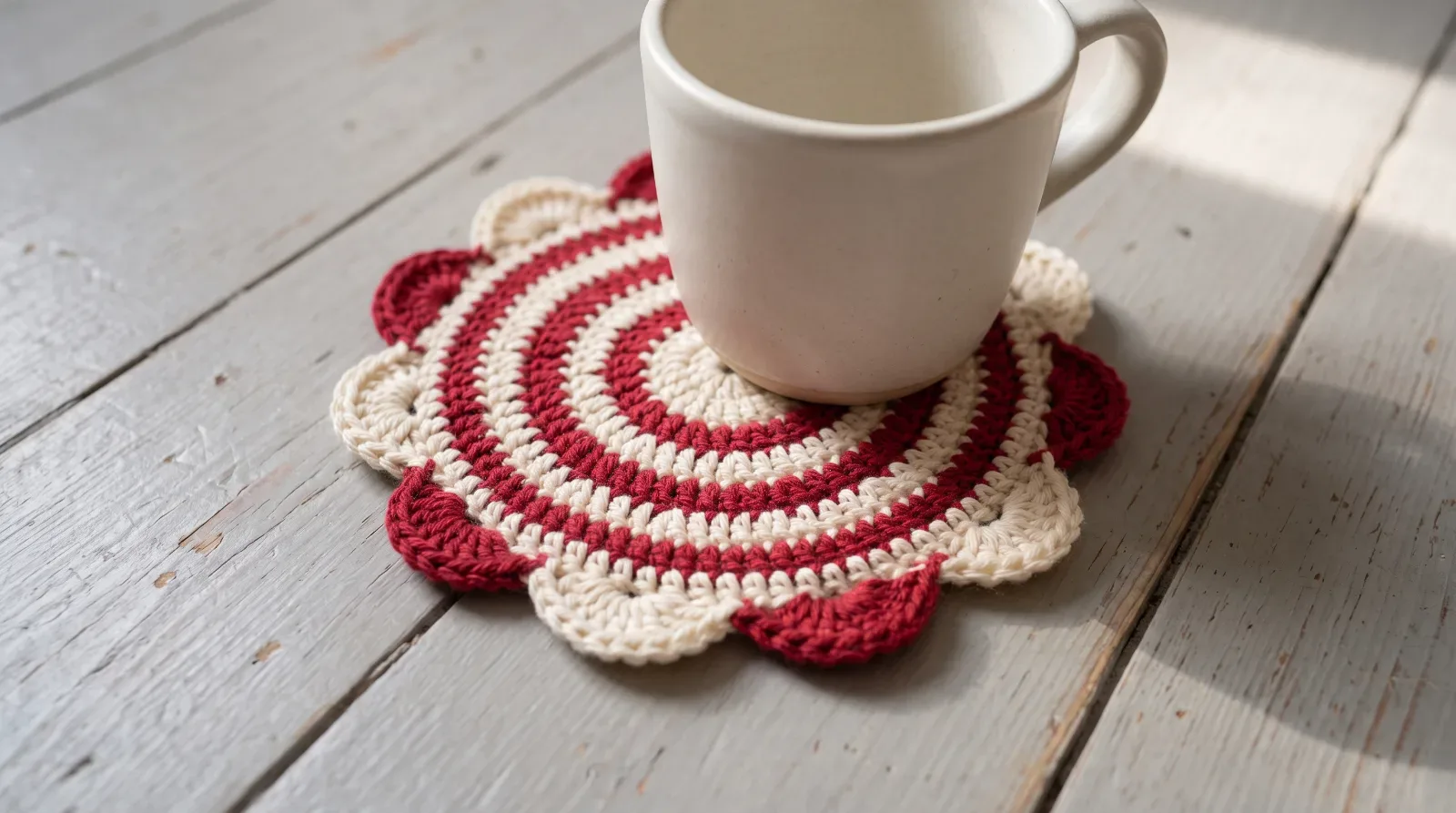
Peppermint Ring Crochet Coaster with Scalloped Edge
Make a round Christmas coaster with genuinely alternating cream and cranberry concentric rings and an eight-scallop edging. It is a candy-inspired bullseye, not a falsely advertised spiral.
Make this project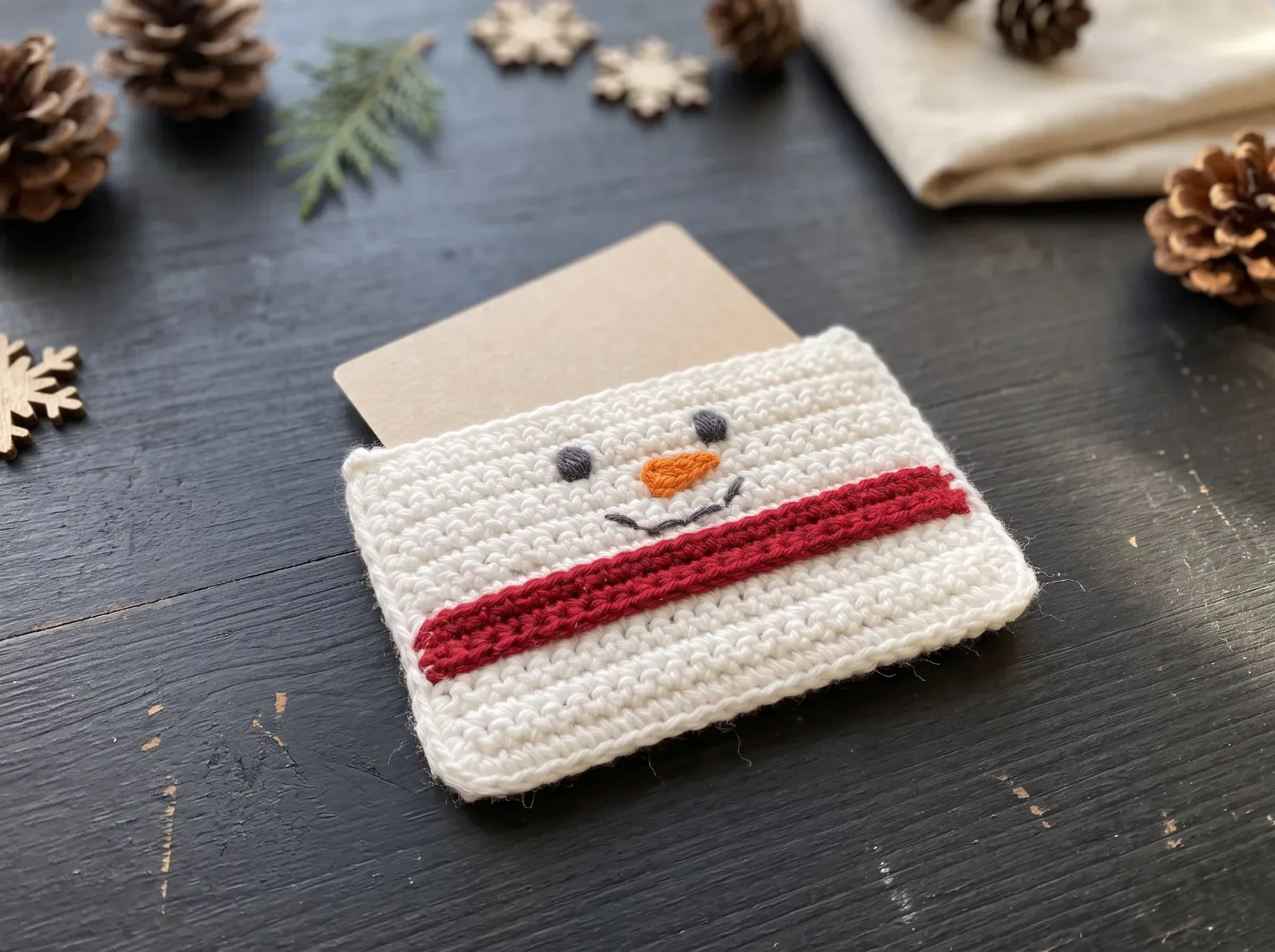
Crochet Snowman Gift Card Pocket with Scarf Trim
Crochet a functional flat snowman-themed gift card sleeve from two white rectangular panels, with embroidered face and a cranberry scarf stripe. Unlike the existing snowman ornaments, this one is an envelope-style holiday gift holder.
Make this projectBuild the next connected skill.
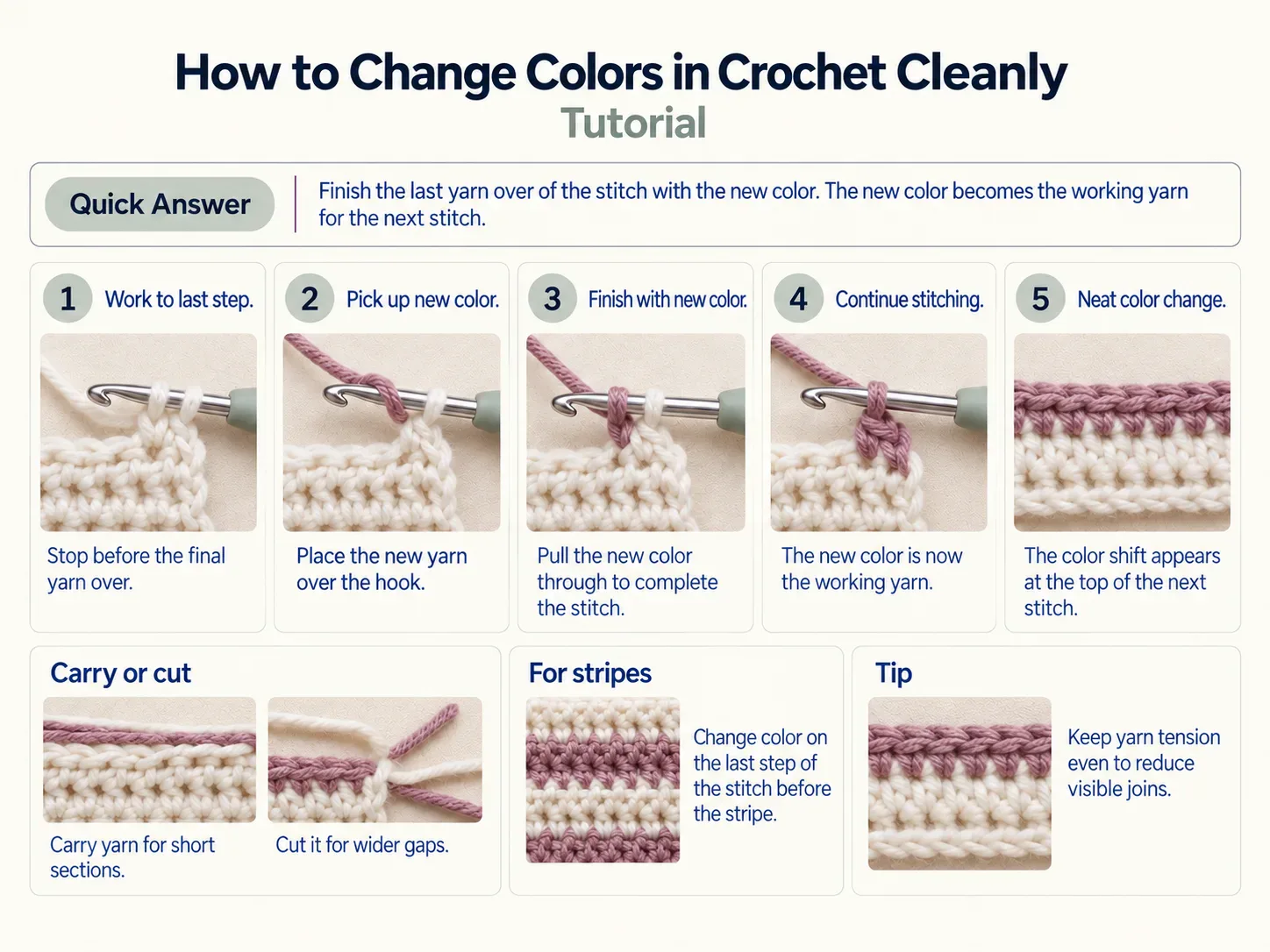
How to Change Colors in Crochet Cleanly
Learn the standard crochet color-change method, how to reduce visible joins, and where to carry or cut yarn for stripes and motifs.
Open guide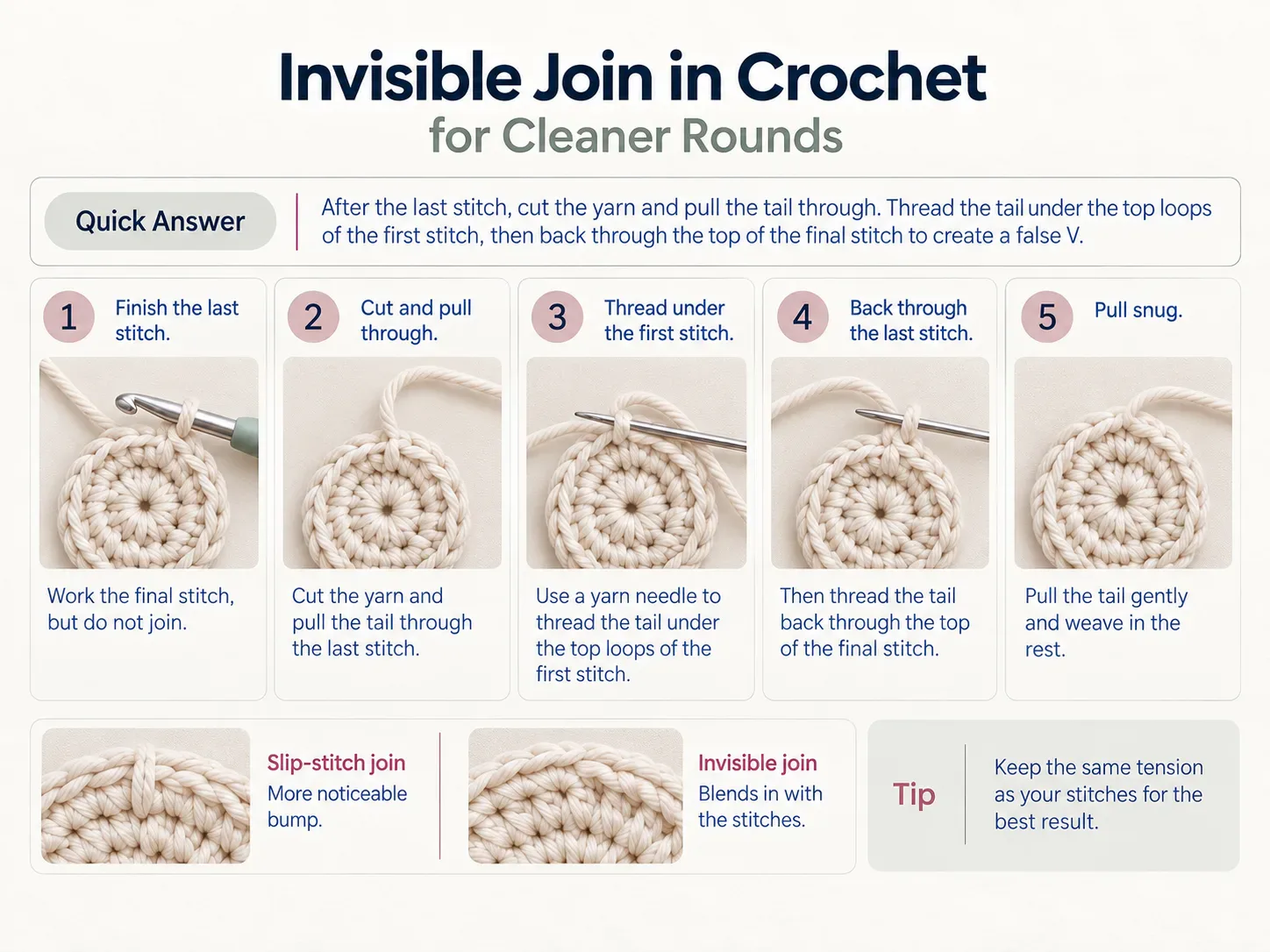
Invisible Join in Crochet for Cleaner Rounds
Use an invisible join to finish a crochet round so the final stitch resembles the top loops of neighboring stitches instead of a bulky slip-stitch join.
Open guide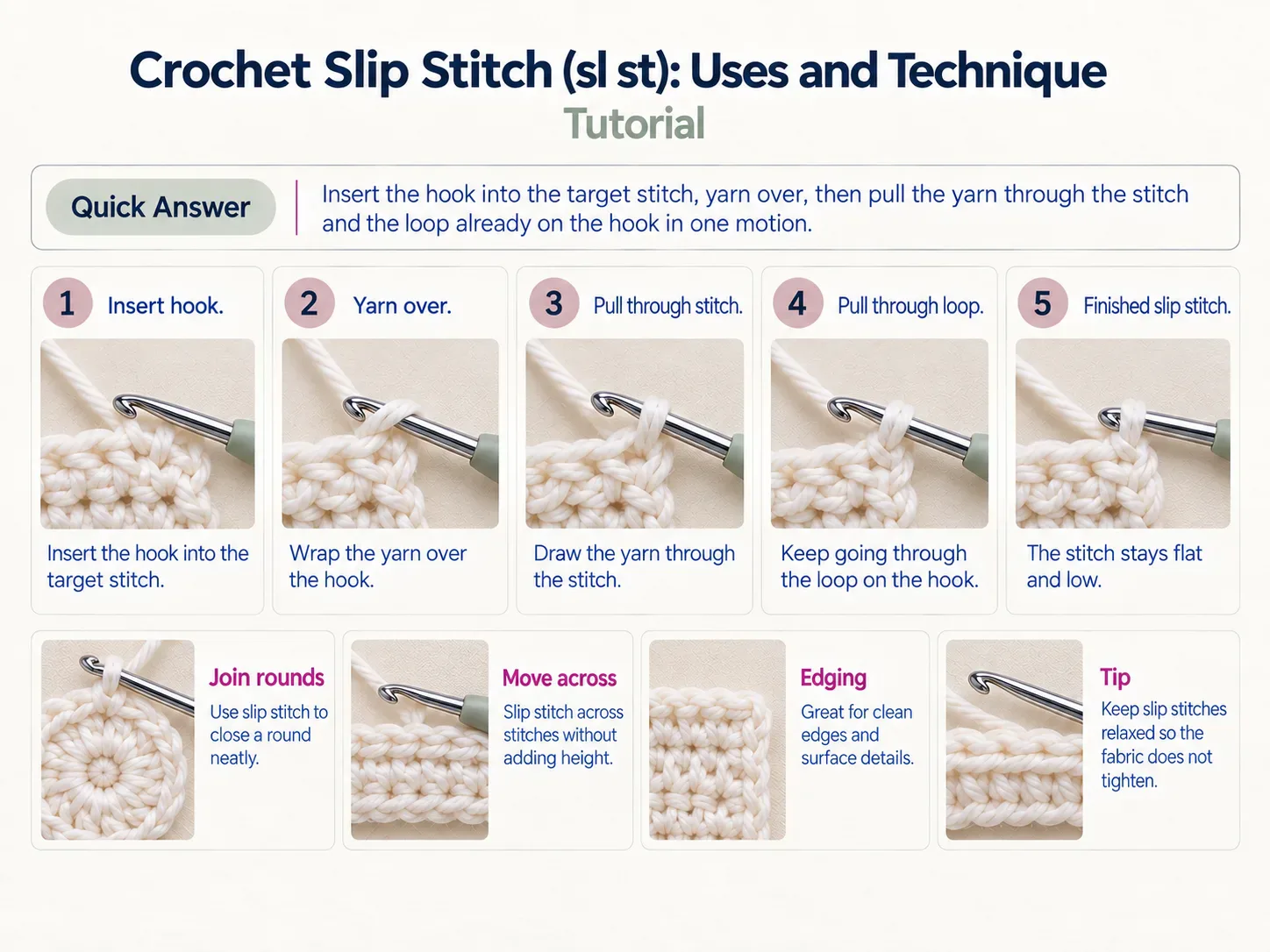
How to Slip Stitch in Crochet (sl st)
Learn how to make a crochet slip stitch and use it for joining rounds, moving across stitches, edging, surface details, and low-profile finishing.
Open guide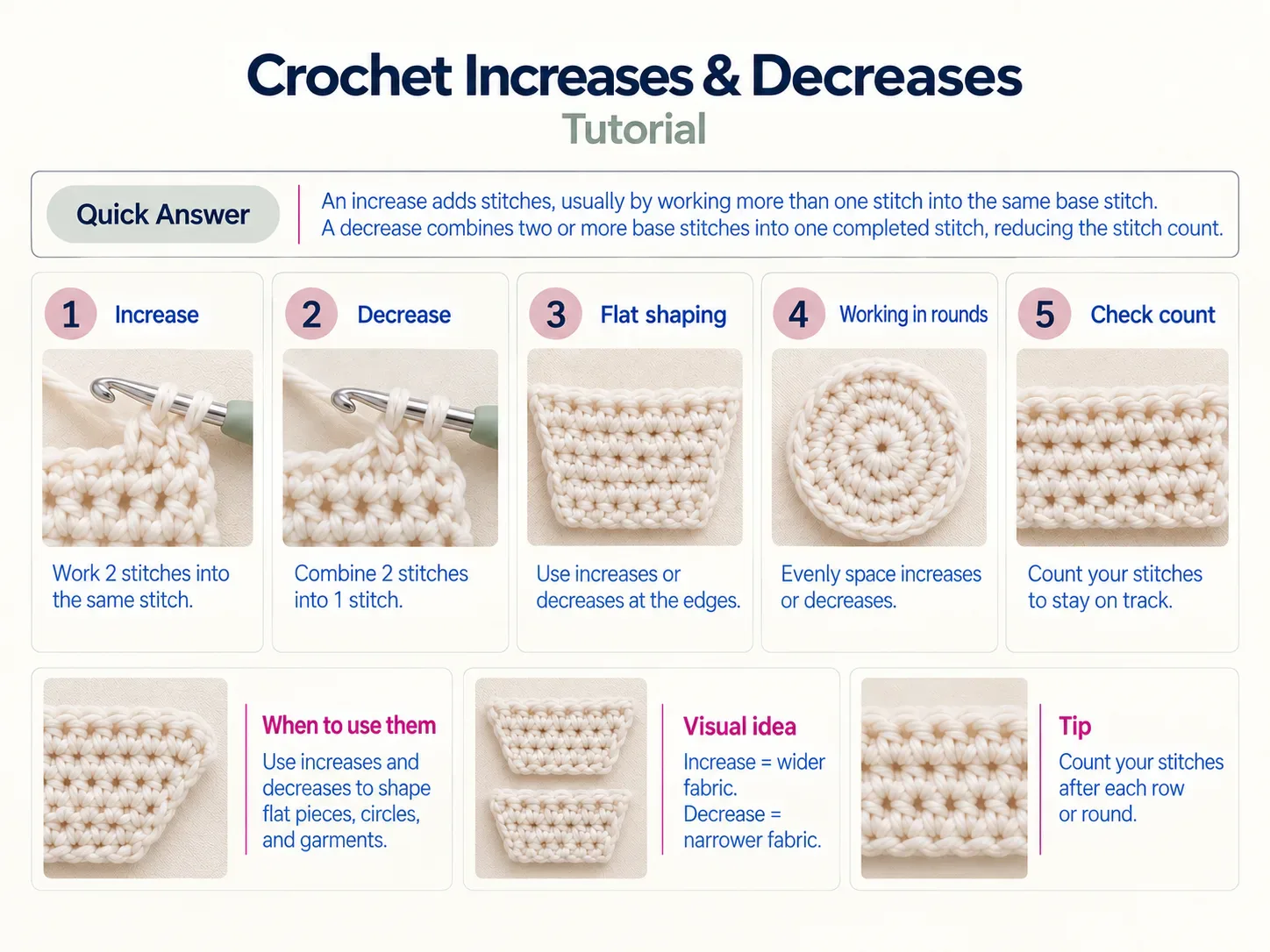
Crochet Increases & Decreases: Shape Your Fabric
Understand basic crochet increases and decreases, how they change stitch count, and how to use them to shape flat pieces, circles, garments, and amigurumi.
Open guide